

Bringing home a Golden Retriever puppy is exciting, but feeding your new companion correctly can feel overwhelming. From choosing the right food to understanding portion sizes and feeding schedules, every decision plays a role in your puppy’s growth and long-term health. Because Golden Retrievers are a large breed, their nutritional needs differ from those of smaller dogs, making proper puppy feeding especially important during the first year of life.
In this puppy feeding guide, you’ll learn how much to feed a Golden Retriever puppy, the nutrients they need, age-based feeding schedules, common feeding mistakes to avoid, and practical tips for supporting healthy development. Whether you’ve just welcomed your first puppy or want to improve your current feeding routine, this guide will help you make informed decisions with confidence.
What is the best puppy feeding approach for Golden Retriever puppies?
The best puppy feeding approach combines balanced nutrition, proper portion control, and a consistent feeding schedule as part of raising a healthy Golden Retriever puppy. Golden Retrievers are a large-breed dog, so their nutritional needs differ from those of smaller breeds.
Unlike toy breeds, Golden Retriever puppies experience rapid growth during their first year. Therefore, excessive calories or improper nutrient balance can contribute to developmental orthopedic issues.
A quality large-breed puppy food should provide:
- Controlled calcium levels
- Balanced phosphorus content
- High-quality protein
- DHA for brain development
- Appropriate calorie density
- Essential vitamins and minerals
Additionally, consistency matters just as much as food quality. Feeding at the same time every day helps regulate digestion and supports healthy growth as part of learning how to take care of a Golden Retriever puppy.
Why nutrition matters during Golden Retriever puppy growth
Nutrition directly affects a Golden Retriever puppy’s growth, bone development, immune function, brain health, and future body condition.
According to the American Kennel Club, Golden Retrievers typically reach between 55 and 75 pounds as adults. This substantial growth occurs within approximately 12 to 18 months, making nutrition critically important during puppyhood.
Moreover, research from veterinary nutrition experts shows that overfeeding large-breed puppies increases the risk of skeletal problems. Controlled growth is healthier than rapid growth.
Key benefits of proper nutrition include:
- Strong bones and joints
- Healthy muscle development
- Improved immune response
- Better cognitive development
- Consistent energy levels
- Reduced obesity risk
Meanwhile, poor feeding practices can cause the following:
- Excessive weight gain
- Digestive upset
- Nutritional deficiencies
- Growth abnormalities
- Increased orthopedic stress
For example, many new owners assume a chubby puppy is a healthy puppy. In reality, veterinarians often prefer puppies to remain lean throughout development.
The American Veterinary Medical Association emphasizes maintaining a healthy body weight throughout growth to support long-term wellness.
How much should you feed a Golden Retriever puppy by age?

The amount of food a Golden Retriever puppy needs depends on age, weight, activity level, food quality, and growth rate, especially during the stages discussed in When Do Golden Retrievers Stop Growing? Feeding recommendations should always be adjusted according to body condition rather than relying solely on package directions.
Golden Retriever puppy feeding chart by age
| Age | Meals Per Day | General Feeding Guidance |
|---|---|---|
| 8–12 weeks | 4 meals | Small portions throughout the day |
| 3–4 months | 3–4 meals | Gradually increase calories |
| 4–6 months | 3 meals | Monitor weight carefully |
| 6–12 months | 2–3 meals | Support steady growth |
| 12+ months | 2 meals | Transition toward adult feeding |
These recommendations provide a starting point. However, every puppy grows differently.
What affects portion sizes?
Several factors influence how much food your puppy needs:
- Current body weight
- Activity level
- Metabolism
- Food quality
- Growth stage
- Overall health
For instance, an active puppy participating in training sessions and outdoor play may require more calories than a less active littermate, making exercise and nutrition equally important when raising a Golden Retriever puppy.
Therefore, owners should regularly assess body condition. You should be able to feel the ribs easily without seeing them prominently.
What nutrients do Golden Retriever puppies need?

Golden Retriever puppies require a carefully balanced combination of protein, fat, vitamins, minerals, and essential fatty acids to support healthy development.
Protein supports muscle growth.
Protein serves as the foundation for muscle development, tissue repair, and overall growth.
High-quality animal proteins such as chicken, salmon, turkey, and lamb provide essential amino acids that support healthy development.
Additionally, growing puppies generally require higher protein levels than adult dogs.
Fat provides concentrated energy.
Healthy fats support brain development, skin health, coat quality, and energy production.
DHA, an omega-3 fatty acid commonly sourced from fish oil, plays an especially important role during puppy development.
Research published by veterinary nutrition specialists has linked DHA supplementation with improved learning and cognitive development in puppies.
Calcium and phosphorus support healthy bones
Calcium and phosphorus are essential for skeletal development. However, balance is critical.
Too much calcium can be just as harmful as too little for large-breed puppies.
Consequently, veterinarians recommend feeding foods specifically formulated for large-breed puppies rather than supplementing calcium independently. Choosing the best dog food for Golden Retriever puppies can help ensure the proper nutrient balance.
Mid-article call to action
Want to raise a healthy, confident puppy from day one? Start by building a feeding routine that supports steady growth, proper nutrition, and long-term joint health. A few smart feeding decisions today can positively influence your Golden Retriever’s health for years.
What is the ideal puppy feeding schedule?

The ideal puppy feeding schedule depends on your Golden Retriever’s age. Younger puppies need frequent meals because they have smaller stomachs and higher energy demands. As they mature, meal frequency gradually decreases.
8 to 12 weeks: feed four meals daily
At this stage, puppies are adjusting to life away from their littermates and breeders.
A typical schedule may look like:
- 7:00 AM – Breakfast
- 11:00 AM – Midday meal
- 3:00 PM – Afternoon meal
- 7:00 PM – Dinner
Consistent meal times help establish routine and support house training.
3 to 6 months: transition to three meals daily
Most Golden Retriever puppies can comfortably move to three meals per day during this period.
Benefits include:
- Easier digestion
- Stable energy levels
- Better appetite regulation
- Simplified daily routine
Meanwhile, growth remains rapid, so monitoring weight and body condition is still essential.
6 to 12 months: transition toward two meals
As growth begins to slow, many puppies can gradually transition to two meals daily.
A common schedule includes:
- Morning meal
- Evening meal
However, highly active puppies may continue benefiting from three smaller meals for a short period.
Puppy feeding schedule comparison by age
| Age | Meals Daily | Main Goal |
|---|---|---|
| 8–12 weeks | 4 | Support adjustment and growth |
| 3–6 months | 3 | Maintain steady development |
| 6–12 months | 2–3 | Prevent overfeeding |
| 12+ months | 2 | Long-term maintenance |
When should you switch puppy food formulas?
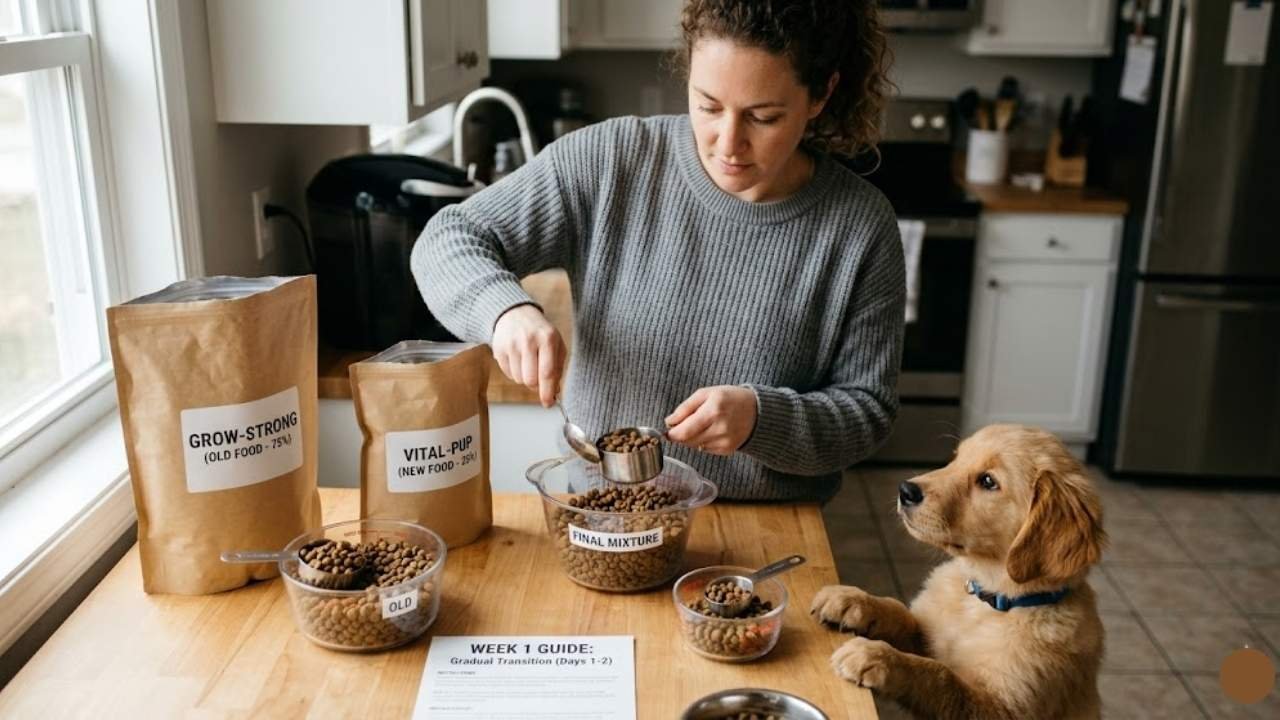
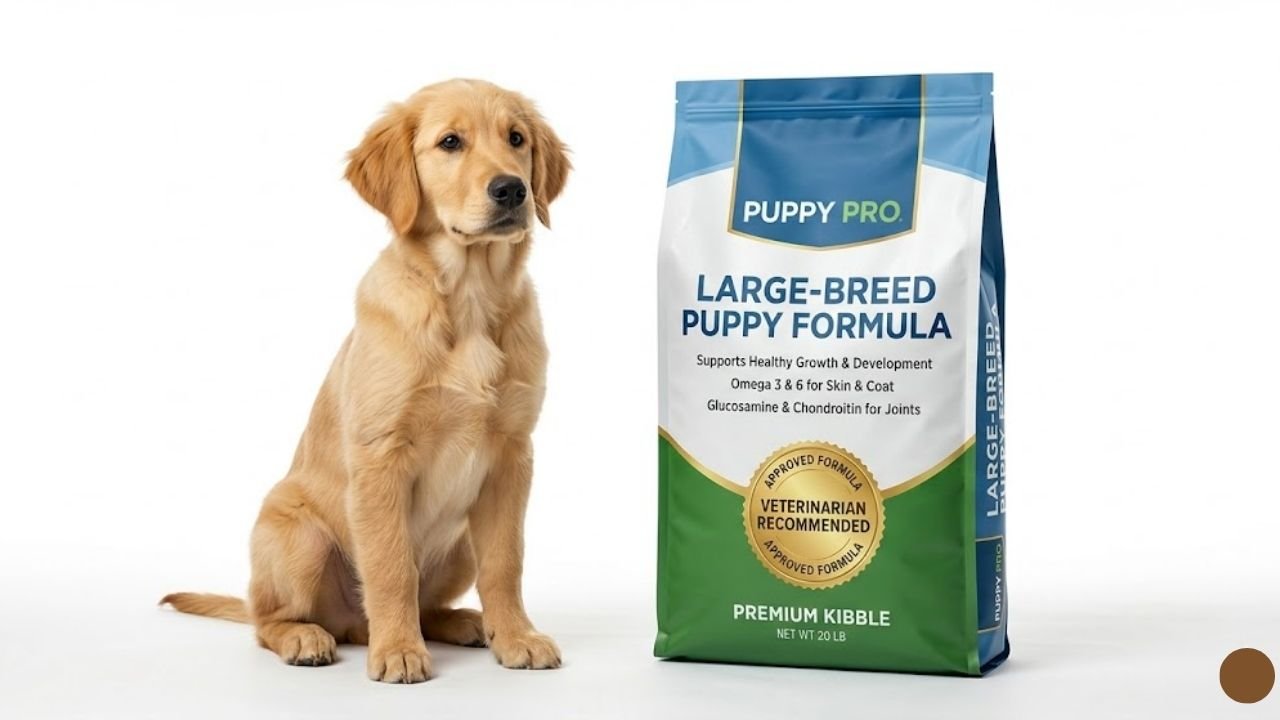
Most Golden Retriever puppies should remain on a large-breed puppy formula until approximately 12 to 18 months of age.
Large breeds mature more slowly than small breeds. Therefore, switching to adult food too early may reduce access to nutrients needed during development.
Signs your puppy may be ready for adult food include:
- Near-adult height
- Stable growth rate
- Veterinary approval
- Healthy body condition
Additionally, any food transition should occur gradually over 7 to 10 days.
A safe transition plan:
- Days 1–2: 75% old food, 25% new food
- Days 3–4: 50% old food, 50% new food
- Days 5–6: 25% old food, 75% new food
- Days 7–10: 100% new food
This approach helps reduce digestive upset.
What are the most common puppy feeding mistakes?
The most common puppy feeding mistakes include overfeeding, inconsistent schedules, excessive treats, and choosing inappropriate food formulas.
Many owners unintentionally create nutrition problems because they confuse appetite with nutritional need.
Overfeeding
Overfeeding is one of the biggest risks for Golden Retriever puppies.
A study from the Morris Animal Foundation found that approximately 59% of dogs in the United States are overweight or obese. Early feeding habits often contribute to this problem.
Signs of overfeeding include:
- Rapid weight gain
- Difficulty feeling ribs
- Reduced waist definition
- Excessive body fat
Feeding adult dog food too early
Adult food formulas often lack the nutrient profile required for healthy puppy growth.
Consequently, puppies should remain on a large-breed puppy formula until development is substantially complete.
Too many treats
Treats should generally make up no more than 10% of daily calorie intake.
Otherwise, puppies may consume excess calories while missing important nutrients from balanced meals.
Frequent food changes
Constantly switching foods can cause:
- Digestive upset
- Loose stools
- Reduced appetite
- Feeding inconsistency
Unless medically necessary, frequent diet changes are usually unnecessary.
How can you tell if your puppy is eating the right amount?
The best way to determine whether your puppy is eating the correct amount is by evaluating body condition rather than focusing solely on weight.
Veterinarians commonly use a Body Condition Score (BCS) system.
A healthy Golden Retriever puppy should:
- Have a visible waist when viewed from above
- Show a slight abdominal tuck from the side
- Have ribs that can be felt easily
- Maintain steady growth
Additionally, healthy puppies typically display:
- Consistent energy
- Normal stools
- Healthy coat quality
- Good muscle development
If you notice sudden weight gain or loss, consult your veterinarian before making major dietary changes.
How does feeding affect future health?
Proper puppy feeding influences a Golden Retriever’s long-term health far beyond the first year of life.
Nutrition during puppyhood affects:
- Joint development
- Muscle formation
- Metabolic health
- Weight management
- Immune function
Moreover, Golden Retrievers are predisposed to several orthopedic conditions. Maintaining a healthy growth rate can help reduce unnecessary stress on developing joints.
Experts increasingly emphasize controlled growth rather than maximum growth.
In other words, faster growth is not better growth.
As veterinary nutrition science continues evolving, large-breed puppy formulas are becoming more precise in supporting healthy skeletal development and lifelong wellness.
Key takeaways
- Feed a high-quality, large-breed puppy food designed for controlled growth.
- Adjust portions based on body condition, not just package recommendations.
- Follow age-appropriate feeding schedules throughout development.
- Avoid overfeeding, excessive treats, and unnecessary food changes.
- Support steady growth rather than rapid weight gain.
Conclusion
Puppy feeding plays a critical role in raising a healthy Golden Retriever. The right food, proper portion sizes, and a consistent feeding schedule help support healthy growth, strong bones, cognitive development, and long-term wellness.
While feeding guidelines provide a useful starting point, every puppy develops differently. Therefore, monitor body condition regularly and work with your veterinarian to make adjustments when necessary.
Frequently asked questions
How many times a day should a Golden Retriever puppy eat?
Most Golden Retriever puppies should eat four meals daily at 8–12 weeks, three meals daily from 3–6 months, and two meals daily after 6 months, depending on individual needs.
What is the best food for a Golden Retriever puppy?
The best food is a high-quality large-breed puppy formula that provides balanced protein, fat, calcium, phosphorus, vitamins, and DHA for healthy growth.
Can you overfeed a Golden Retriever puppy?
Yes. Overfeeding can contribute to excessive weight gain, joint stress, and unhealthy growth patterns. Monitoring body condition is more important than following feeding charts alone.