Bringing home a Golden Retriever puppy is exciting for any dog lover. Golden Retrievers are known for their friendly nature, intelligence, and eagerness to please, which makes them one of the best family dogs in the world. But even with all of those wonderful qualities, a Golden Retriever puppy still needs proper training from the beginning. Without structure, routine, and consistency, that adorable puppy can quickly develop habits that become frustrating later.
The good news is that Golden Retriever puppy training does not have to be complicated. In fact, this breed often responds extremely well to calm, reward-based methods that focus on repetition, patience, and trust. The key is knowing what to teach first, when to teach it, and how to make training a positive part of daily life.
In this guide, you will learn proven methods that actually work for Golden Retriever puppy training. We will cover everything from potty training and crate training to socialization, basic obedience, leash walking, biting, jumping, and common mistakes to avoid. Whether you are bringing home your first puppy or simply want a better plan, this guide will help you raise a well-mannered, confident Golden Retriever.
Why Golden Retriever Puppy Training Matters So Much
Golden Retrievers are often described as naturally good dogs, and in many ways that is true. They are affectionate, intelligent, social, and usually very responsive to people. However, being a naturally friendly breed does not mean they train themselves.
A Golden Retriever puppy is energetic, curious, and still learning how to behave in a human home. They do not automatically understand where to potty, how to walk politely on a leash, when to stop biting, or why jumping on guests is not okay. Those things need to be taught.
Early training matters because it shapes the habits your puppy will carry into adulthood. A puppy that learns calm behavior, clear routines, and good manners early is much easier to live with later. Training also builds communication between you and your dog. Instead of guessing what you want, your puppy begins to understand your cues, routines, and expectations.
Training is also important because Golden Retrievers grow into large, strong dogs. A small puppy that pulls on the leash, jumps on people, or ignores recall may seem cute at first, but those same habits become much harder to manage when the dog is full grown. If you have ever wondered when do Golden Retrievers stop growing, the answer is that they continue maturing for quite a while, which means the training you start now has a long-term impact on the adult dog your puppy becomes.
The Best Time to Start Training a Golden Retriever Puppy
The best time to start training a Golden Retriever puppy is the day they come home. That does not mean intense obedience sessions or strict drills. It means introducing simple structure and good habits right away.
Most puppies come home at around 8 weeks old. At that age, they are fully capable of learning:
- Their name
- Where to potty
- Where to sleep
- How to sit for food or attention
- How to follow a basic routine
- How to feel safe in a crate
- How to focus on you for rewards
Training at this stage should be short, gentle, and positive. Think in terms of building habits rather than demanding perfection. Your puppy is not supposed to know everything in a week. The goal is to create a strong foundation.
The Golden Retriever Personality and How It Affects Training
Golden Retrievers are usually eager to please, food motivated, and highly people-oriented. These traits are helpful in training because they often enjoy working with their owners. Many Golden Retrievers love praise, treats, toys, and games, which gives you several ways to reward good behavior.
At the same time, this breed can also be excitable and mouthy as puppies. They may jump when greeting people, grab clothing during play, or get distracted easily outdoors. Some are very soft-hearted and do not respond well to harsh correction. That is why training methods based on fear, yelling, or punishment often backfire with Golden Retrievers.
The most effective approach is positive reinforcement. That means you reward the behaviors you want to see more often. If your puppy sits calmly, goes potty outside, comes when called, or walks nicely next to you, you reward that behavior with something they value. Over time, those good choices become habits.
Golden Retriever Puppy Training Principles That Actually Work
Before we get into specific training steps, it helps to understand the core principles behind successful puppy training.
1. Keep training sessions short
Young puppies have short attention spans. Five to ten minutes is often enough for one session. Several short sessions throughout the day work better than one long session.
2. Reward immediately
If your puppy does something right, reward it quickly. The faster the reward comes, the easier it is for your puppy to understand what behavior earned it.
3. Be consistent with cues
If you use “sit” today, do not switch to “sit down” tomorrow. Keep your commands clear and consistent.
4. Prevent bad habits instead of constantly correcting them
Management is a huge part of puppy training. Baby gates, leashes indoors, crates, and structured routines prevent your puppy from rehearsing bad habits.
5. Use your puppy’s daily life as training time
Training is not just a separate event. Mealtimes, potty breaks, walks, play, and greetings all offer opportunities to teach good manners.
6. Stay calm and patient
Puppies make mistakes. They will have accidents, chew things, forget cues, and get overstimulated. That does not mean training is failing. It means your puppy is still learning.
Potty Training a Golden Retriever Puppy
Potty training is usually the first big challenge for new puppy owners. The good news is that Golden Retrievers can do very well with house training when you create a clear routine and supervise carefully.
Start with a predictable potty schedule
Young puppies need frequent bathroom breaks. Take your Golden Retriever puppy out:
- First thing in the morning
- After every meal
- After every nap
- After play sessions
- Before bedtime
- Every 1 to 2 hours during the day when very young
The younger the puppy, the more often they need to go. Waiting too long makes accidents much more likely.
Always take your puppy to the same potty spot
Using the same area helps your puppy associate that location with going to the bathroom. The smell also reinforces the habit.
Reward immediately after they go
As soon as your puppy finishes peeing or pooping outside, praise warmly and offer a small treat. This is one of the fastest ways to teach that going outside is the correct behavior.
Watch for signs they need to go
Common potty signals include:
- Sniffing the floor
- Walking in circles
- Suddenly wandering away
- Squatting
- Whining near the door
- Becoming restless after eating or playing
If you see any of these signs, take your puppy out immediately.
What to do about accidents
If you catch your puppy in the act, interrupt gently and take them outside right away. Do not yell, punish, or rub their nose in it. If you find an accident after the fact, simply clean it thoroughly with an enzyme cleaner and adjust your routine so the next one is less likely.
Crate Training a Golden Retriever Puppy
Crate training is one of the most useful tools in puppy training when done correctly. A crate can help with potty training, sleep routines, travel, safety, and teaching your puppy how to settle.
The key is to make the crate feel safe, not like punishment.
How to introduce the crate
Place the crate in a quiet but not isolated part of the house. Add a soft bed if your puppy does not chew bedding, and make it inviting.
Start by:
- Tossing treats inside
- Feeding meals near or inside the crate
- Letting your puppy explore it freely
- Praising them for entering on their own
Do not force your puppy into the crate. Let them build positive associations at their own pace.
Build crate time gradually
Once your puppy is comfortable going inside, begin closing the door for very short periods while you stay nearby. Then slowly increase the duration.
A good crate routine includes:
- Short naps in the crate during the day
- Quiet time after play
- Overnight sleeping in the crate if that works for your home
- Crate use when you cannot supervise
Avoid common crate mistakes
Do not use the crate as punishment. Do not leave a very young puppy crated for too long. And do not expect the crate to solve behavior problems by itself. It is a training tool, not a replacement for exercise, attention, and supervision.
Teaching Your Golden Retriever Puppy Their Name
Name recognition is one of the easiest and most useful early lessons.
Say your puppy’s name in a happy tone. The moment they look at you, mark it with praise and give a treat. Repeat this throughout the day in different rooms and during quiet moments. Soon your puppy will learn that hearing their name means paying attention to you.
This simple game becomes the foundation for recall, focus, and better engagement during all other training.
Basic Obedience Commands to Teach First
You do not need to teach ten commands at once. Start with a few high-value basics that improve everyday life.
Sit
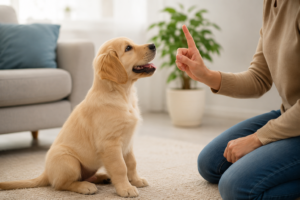
Hold a treat near your puppy’s nose, then move it slowly upward and slightly back. As their head follows the treat, their bottom will naturally lower. The moment they sit, reward them.
Use sit before meals, before going outside, before greeting people, and before getting toys. This teaches your puppy that calm behavior opens doors to good things.
Come
Recall is one of the most important skills your dog will ever learn. Start indoors in a distraction-free area. Crouch down, say your puppy’s name followed by “come,” and reward generously when they reach you.
Make coming to you fun. Never call your puppy to punish them or end every enjoyable moment.
Down
Use a treat to guide your puppy from a sit into a lying position. Reward once their elbows hit the floor. This cue is useful for calm settling and impulse control.
Stay
Keep stay very short at first. Ask for a sit, say “stay,” take a tiny step back, then return and reward. Gradually increase distance and duration.
Leave it
This is a lifesaving cue for puppies who want to grab everything. Start by placing a treat in your closed hand. Let your puppy sniff. The moment they stop trying to get it, reward them with a different treat from your other hand. Over time, your puppy learns that ignoring something earns a better reward.
Leash Training for Golden Retriever Puppies
Golden Retrievers usually become strong pullers if leash manners are not taught early. The goal is not a perfect heel from day one. It is teaching your puppy that walking near you is rewarding and pulling does not get them where they want to go.
Start indoors or in the yard
Put the leash on and let your puppy walk a few steps beside you. Reward frequently for being close. Keep early sessions short and positive.
Stop when your puppy pulls
If your puppy hits the end of the leash and pulls, stop walking. The moment they turn back toward you or release tension, continue moving. This teaches that pulling makes the walk stop, while a loose leash keeps it going.
Reward check-ins
Any time your puppy looks at you during a walk, praise and reward. This builds engagement and helps your dog learn that paying attention to you is valuable, even outdoors.
How to Stop Golden Retriever Puppy Biting and Nipping
Puppy biting is one of the most common complaints from new owners, especially with retriever breeds. Golden Retriever puppies explore the world with their mouths, and they also go through teething. Some nipping is normal, but that does not mean you should ignore it.
Why Golden Retriever puppies bite
Common reasons include:
- Teething discomfort
- Excitement
- Overtiredness
- Overstimulation
- Wanting attention
- Trying to initiate play
What to do instead of punishing
If your puppy starts biting hands, sleeves, or ankles, calmly redirect them to an appropriate chew toy. Keep toys available in every room where your puppy spends time.
If the biting continues, end the interaction briefly. Stand up, step away, or place a barrier between you and the puppy for a short reset. This teaches that biting makes the fun stop.
Make sure your puppy gets enough sleep
Overtired puppies are often the mouthiest. Many Golden Retriever puppies become wild and bitey when they actually need a nap. Structured rest is a big part of training.
Teaching Your Puppy Not to Jump on People
Golden Retriever puppies are social and affectionate, so jumping often starts because they are excited to greet people. Unfortunately, a large adult Golden Retriever jumping on guests is not cute or safe.
The solution is to teach your puppy what to do instead.
Reward four paws on the floor
When your puppy approaches calmly, reward them before they jump. If they jump, remove attention by turning away briefly. The moment all four paws are back on the floor, reward.
Ask for a sit to greet
A simple sit becomes a powerful replacement behavior. Before petting, greeting, or opening the door for visitors, ask your puppy to sit. If they stay calm, they get attention. If they jump, the greeting pauses.
Consistency matters here. If one person rewards jumping and another person discourages it, your puppy gets mixed signals.
Socialization: One of the Most Important Parts of Puppy Training
Training is not just about commands. Socialization is one of the most important parts of raising a stable, confident Golden Retriever.
Proper socialization means safely exposing your puppy to the world in a positive way. This includes:
- Different people
- Friendly vaccinated dogs
- Car rides
- Grooming tools
- Vacuum cleaners
- Doorbells
- Children
- Men with hats
- People carrying bags
- New surfaces like grass, tile, gravel, and wood floors
- Busy but safe outdoor environments
The goal is not to overwhelm your puppy. It is to create positive experiences so new things feel normal instead of scary.
A well-socialized Golden Retriever is usually easier to train because they are less likely to become fearful, reactive, or overly stressed by everyday situations.
Teaching Calmness and Impulse Control
One mistake many owners make is focusing only on activity and commands while forgetting to teach calm behavior. Golden Retrievers are active dogs, but they also need to learn how to settle.
Teach your puppy to relax on a mat or bed
Choose a small mat or dog bed. Every time your puppy steps on it, reward. Then begin rewarding for sitting, lying down, and staying calm there. Over time, the mat becomes a place to settle while you work, eat, or relax.
Use food puzzles and chews
Mental enrichment helps puppies calm down. Safe chew items, stuffed food toys, and sniffing games can reduce boredom and teach your puppy to focus.
Reward calm moments throughout the day
Do not only reward active training. If your puppy lies quietly by your feet, reward that too. Calmness is a behavior worth reinforcing.
Handling, Grooming, and Vet Prep Training
Golden Retrievers need regular grooming, nail trims, ear checks, and handling. The earlier you teach your puppy to accept these things, the easier life becomes later.
A few times a day, gently touch:
- Paws
- Ears
- Tail
- Collar area
- Mouth
Pair this with treats and calm praise. Introduce brushing in short, positive sessions. Let your puppy lick a treat while you brush a few strokes, then stop. This creates a positive association instead of a wrestling match.
How to Use Meals for Training
One of the easiest ways to train a Golden Retriever puppy is to stop thinking of food only as something served in a bowl. Part of your puppy’s daily meal can be used as training rewards.
You can use kibble to practice:
- Sit
- Come
- Name response
- Crate entry
- Down
- Leash walking
- Leave it
- Settle on a mat
This gives you many chances to reinforce good behavior without overloading your puppy with extra treats.
A Sample Golden Retriever Puppy Daily Training Routine
A puppy does best with rhythm and predictability. Here is a simple example of how training can fit into a normal day.
Morning
- Potty break immediately after waking
- Short training session for name, sit, and come
- Breakfast used partly for training
- Short play session
- Potty break
- Crate nap
Midday
- Potty break after nap
- Short walk or leash practice
- Socialization outing or gentle exposure to something new
- Training session for down, leave it, or recall
- Lunch if your puppy still eats three meals a day
- Potty break
- Rest time
Afternoon
- Potty break
- Play with toys and short obedience practice
- Grooming or handling session
- Calm settle time on a mat
- Potty break
Evening
- Dinner
- Walk or light exercise
- Family time with supervised play
- Potty break
- Short training review
- Wind-down routine
- Final potty trip before bed
This type of structure makes training easier because your puppy learns what to expect.
Common Golden Retriever Puppy Training Problems and How to Fix Them
My puppy listens at home but not outside
This is extremely common. Dogs do not automatically generalize behavior to every environment. If your puppy knows sit in the kitchen, they may not understand it in the park.
The solution is to practice in gradually harder places. Start indoors, then move to the yard, then a quiet sidewalk, then more distracting environments.
My puppy is too hyper to train
Often this means one of three things:
- The puppy is overtired
- The environment is too distracting
- The training session is too long
Try training after a potty break, in a calm room, for just a few minutes. Also make sure your puppy is getting enough sleep. Young puppies need a surprising amount of rest.
My puppy has accidents even though we are training
Go back to basics. Increase supervision, take more frequent potty breaks, and clean accidents thoroughly. Many potty issues come down to giving the puppy too much freedom too soon.
My Golden Retriever puppy mouths us constantly
Increase naps, redirect to chew toys, keep sessions calm, and avoid rough play that encourages grabbing skin or clothes. If biting increases at a certain time of day, look at your puppy’s schedule. They may be tired rather than naughty.
Mistakes to Avoid in Golden Retriever Puppy Training
Being inconsistent
If jumping is allowed on some days but not others, or if potty breaks happen randomly, your puppy learns more slowly.
Expecting too much too soon
Your puppy is still a baby. Training takes repetition. Progress is not always perfectly linear.
Using punishment for normal puppy behavior
Yelling, leash jerks, or harsh correction often create fear or confusion, especially in sensitive, people-oriented breeds like Golden Retrievers.
Giving too much freedom too early
If your puppy is having accidents, chewing furniture, or stealing items, they probably need more supervision and management rather than more punishment.
Only training commands and ignoring behavior
A well-trained puppy is not just one that can sit. It is one that can settle, greet politely, tolerate grooming, walk nicely, and feel confident in everyday life.
How Long Does It Take to Train a Golden Retriever Puppy?
Training is not a one-week project. It is an ongoing process that develops as your puppy grows. Some skills improve quickly, while others take months of repetition.
For example:
- Name recognition can improve in days
- Potty training often takes weeks to months
- Leash walking may improve gradually over many months
- Recall takes ongoing practice
- Calmness and impulse control develop over time
Remember that Golden Retrievers go through puppyhood and adolescence before becoming fully mature adults. If you are wondering when do Golden Retrievers stop growing, it is helpful to know that physical growth and mental maturity do not happen overnight. Your puppy may look bigger long before they behave like a calm adult dog. That is normal.
Understanding Behavior During Growth and Maturity
As your Golden Retriever puppy grows, their behavior will change. A very young puppy may be sleepy and dependent, while an older puppy becomes more energetic, independent, and distracted. Adolescence can bring testing behavior, selective hearing, and bursts of excitement.
This is where many owners worry that something is wrong. It usually is not. It simply means your puppy is growing up and needs continued guidance.
For example, some owners begin to ask behavior questions such as why do Golden Retrievers paw at you as their puppy becomes more expressive and interactive. Pawing can be a form of attention-seeking, excitement, affection, or communication. It is one more reminder that behavior should always be understood in context rather than labeled as “good” or “bad” too quickly.
Likewise, some people worry about whether rough play, barking, or guarding toys means a serious problem and ask things like are Golden Retrievers aggressive. In most cases, Golden Retrievers are not naturally aggressive dogs, but any dog can develop problem behaviors if they are fearful, poorly socialized, overexcited, or not taught appropriate boundaries. That is why puppy training matters so much. Good training and socialization help prevent many future behavior issues before they become deeply ingrained.
The Role of Exercise in Training Success
Golden Retriever puppies need physical activity, but exercise alone does not replace training. A puppy that gets plenty of movement but no structure may still jump, bite, bark, and pull on the leash.
The goal is balance:
- Age-appropriate exercise
- Mental stimulation
- Training games
- Rest
- Socialization
- Calm settling practice
Too little activity can create boredom, while too much intense activity can create an overtired, overexcited puppy. A balanced routine supports better behavior and better learning.
Why Positive Reinforcement Works So Well for Golden Retrievers
Golden Retrievers tend to thrive when training feels rewarding and cooperative. Positive reinforcement works because it teaches your puppy exactly what to do instead of only focusing on what not to do.
If your puppy gets rewarded for sitting politely, they will sit more often.
If they get rewarded for coming when called, recall becomes stronger.
If they get rewarded for lying calmly on a mat, relaxation becomes easier.
This method also protects your relationship with your dog. Your puppy learns that listening to you is safe, enjoyable, and worth it. That trust becomes incredibly valuable as your dog grows.
Final Thoughts on Golden Retriever Puppy Training
Golden Retriever puppy training works best when it is simple, consistent, and built into everyday life. You do not need harsh methods, endless corrections, or complicated routines. What you need is a clear plan, realistic expectations, and a commitment to rewarding the behaviors you want to see more often.
Start with the essentials: potty training, crate training, name recognition, socialization, biting prevention, leash manners, and basic obedience. Keep sessions short, use rewards generously, and stay patient through the ups and downs of puppyhood.
Your Golden Retriever puppy is not trying to be difficult. They are learning how to live in your world. Every routine you build, every calm repetition, and every positive training session helps shape the dog they will become.
With time, structure, and proven methods that actually work, your Golden Retriever puppy can grow into the friendly, well-mannered companion this breed is famous for.