
Golden Retrievers are loving, playful, and always ready for a cuddle. Yet many owners quietly wonder, why do golden retrievers smell even when they look perfectly clean? The answer isn’t always simple. Their thick coat can trap moisture, dirt, and natural oils, which may lead to the golden retriever’s bad odor over time.
Sometimes the cause is harmless, like the classic wet dog smell golden retriever owners notice after swimming. Other times, issues such as a fishy smell in golden retrievers or poor grooming habits raise concern. If you’ve ever asked, “Why does my golden retriever stink?” you’re not alone. Understanding the root cause helps you fix odor safely and effectively.
Do Golden Retrievers Naturally Smell?

Many owners ask, “Do golden retrievers smell naturally, or is something wrong?” Every dog has a mild scent from natural oils. Their skin produces oils to protect against dryness. This can create a light golden retriever-body odor, especially after outdoor play.
Problems begin when oils mix with moisture. Their coat traps debris, promoting yeast overgrowth or bacterial infection. Climate matters too. Humid states like Florida increase moisture retention. Dry states may cause dandruff and excess oil production instead.
Why Do Golden Retrievers Smell? (Quick Answer)
So, why do golden retrievers smell, in simple terms? The most common reasons include bacteria, yeast, trapped moisture, and poor hygiene. Add diet issues or anal gland impaction, and the odor becomes stronger.
If you’re wondering why golden retrievers smell bad, look at grooming, ears, teeth, and diet first. A persistent golden retriever’s bad odor may signal infection. Occasional odor after play is normal. Constant odor is not.
Common Causes of Bad Smell in Golden Retrievers
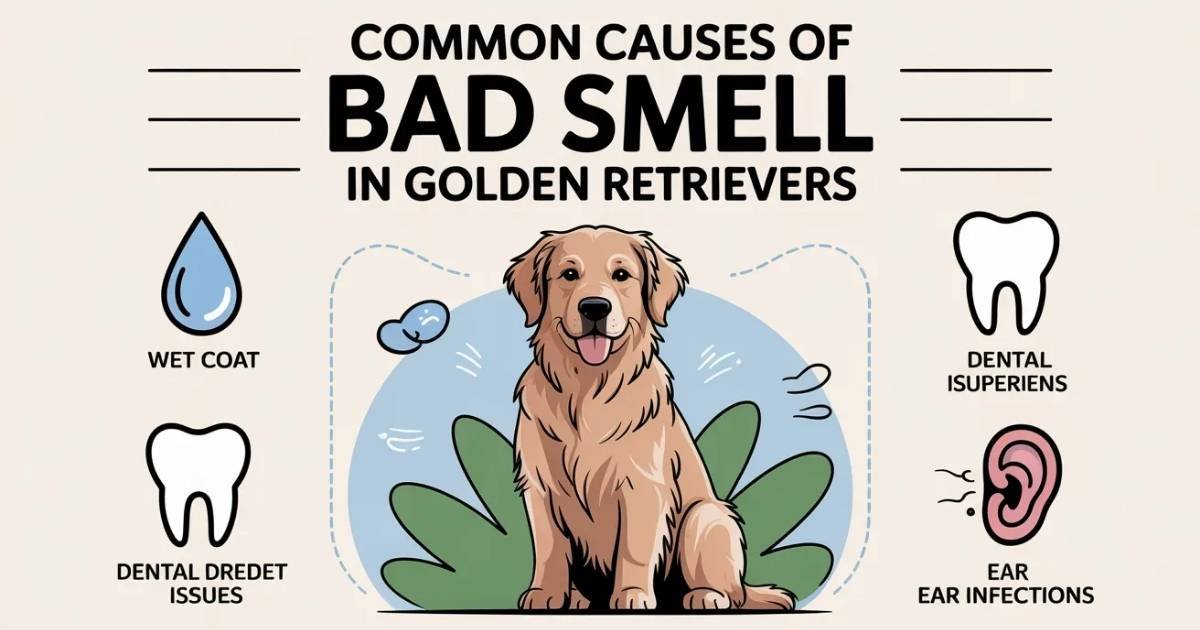
The biggest cause behind my golden retriever’s stink is microbial growth. When dirt stays on skin, skin infections develop. These may lead to golden retriever skin infection, odor, itching and scratching, and redness and swelling. Severe cases may show pus-filled lesions linked to pyoderma.
Diet and hygiene also matter. Dental disease, gum disease, and plaque buildup cause bad breath in dogs. A foul odor often comes from ear infections caused by bacteria or yeast (Dog Ear Infection Odor Guide). Dirty bedding and environmental factors like stagnant water exposure make odors worse.
| Cause | Common Sign | Possible Condition |
|---|---|---|
| Skin irritation | Scratching | bacterial infection |
| Oily coat | Greasy touch | excess oil production |
| Ear debris | Odor, discharge | ear infections |
| Fishy rear smell | Scooting | anal gland impaction |
Fishy Smell in Golden Retrievers – What Does It Mean?
A strong fishy smell in golden retrievers often points to anal glands. When blocked, they create a golden retriever anal gland smell. Scooting or excessive licking near the tail confirms irritation.
Infections can also cause a golden retriever’s fishy smell. Watch for swelling or pain. Untreated issues may require antibacterial medication. In some cases, hormonal imbalance or hypothyroidism affects gland health.
Why Does My Golden Retriever Smell After a Bath?
You bathe your dog yet notice a golden retriever smell after the bath. This usually happens when the coat stays damp. Moisture trapped deep inside promotes yeast overgrowth.
Using the wrong dog-specific shampoo can strip oils, so choosing the best shampoo for Golden Retrievers helps maintain healthy skin and coat balance. The skin reacts with greasy skin and rebound oil. Regular grooming and complete drying reduce odor naturally (dog grooming tips for odor). Once monthly works for most U.S. households unless mud is involved.
Why Do Golden Retrievers Smell Worse When Wet?
The classic wet-dog-smell golden retriever effect happens because water releases hidden odor compounds. When fur becomes wet, bacteria become active. Heat increases microbial growth.
Swimming in lakes increases risk due to stagnant water exposure. This may cause a golden retriever to have a yeast infection smell later. Always rinse with clean water and dry thoroughly.
Do golden retrievers smell more than other dogs?
Compared to short-haired breeds, Goldens hold more moisture. Their long coat traps odor easily. That explains why some people believe that golden retrievers smell more than Labradors.
However, genetics and care matter more than breed. Poor hygiene leads to a golden retriever’s bad odor regardless of coat length. Proper care keeps the smell minimal.
Health Problems That Can Cause Odor

Sometimes, why golden retrievers smell is connected to health disorders, especially underlying food allergies in golden retrievers that affect skin and coat health. Chronic skin infections, persistent ear infections, or untreated food allergies change skin chemistry.
Look for digestive issues, stool changes, or skin pigmentation changes. These may signal systemic illness. Severe cases may require antifungal treatment or long-term medication. Early vet care prevents complications.
How to Keep Your Golden Retriever Smelling Good
If you want to know how to stop a golden retriever’s smell, focus on routine. Brush several times weekly using the right grooming tools for Golden Retrievers to remove trapped dirt, loose fur, and excess oils effectively. Maintain a balanced diet rich in omega-3 fatty acids to support skin health.
Clean ears gently. Wash bedding weekly. Schedule professional grooming every few months. These steps help prevent bad smells in golden retrievers without harming skin oils.
| Care Step | Frequency |
|---|---|
| Brushing | 3–4 times weekly |
| Bathing | Every 4 weeks |
| Ear cleaning | Weekly |
| Bedding wash | Weekly |
Best Grooming Routine for Golden Retrievers
A healthy routine reduces odor dramatically. Start with brushing. It removes trapped dirt. Follow with monthly bathing using mild shampoo.
After swimming, dry the coat fully. Trim excess fur around ears. Inspect for discharge from the ears. Preventive care reduces infections before they start.
Home Remedies to Reduce Golden Retriever Odor
Natural remedies can help with a mild odor. A diluted apple cider rinse balances pH. Baking soda freshens bedding.
Coconut oil may calm dry skin. However, never treat a serious bacterial infection at home. Persistent golden retriever body odor needs professional care.
When Should You See a Vet for a Bad Smell?
See your vet about why a golden retriever’s ears become constantly and intensely smelly. Red skin, swelling, pain, or behavior changes require medical review.
If odor pairs with itching and scratching, appetite loss, or fatigue, act fast. Early treatment protects your dog’s comfort and prevents larger health problems.