

Feeding your golden retriever the best homemade dog food recipes for golden retrievers ensures they get wholesome, balanced nutrition tailored to their needs. Unlike commercial kibble, these homemade dog food recipes allow you to control every ingredient, creating healthy homemade dog meals that support energy, digestion, and coat health.
By including the right portions of protein, carbohydrates, and healthy fats for dogs, you meet their specific nutritional requirements while avoiding preservatives and fillers. Homemade meals also allow customization based on age, weight, and activity level, promoting a longer, healthier life and supporting a balanced dog food approach for a happy, active golden retriever pet.
Nutritional Needs of Golden Retrievers
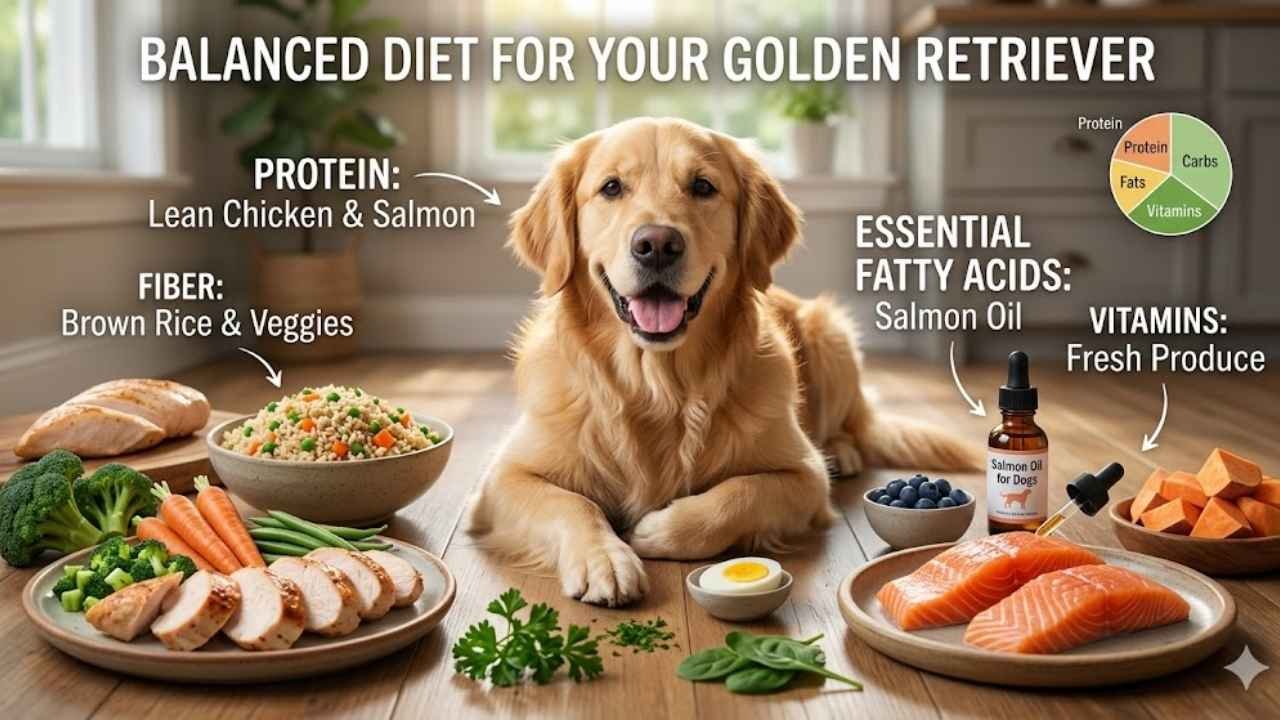
Golden retrievers are large, active dogs that need carefully balanced meals. A proper natural dog food diet must provide enough energy without adding extra weight. Their dog’s calorie intake depends on age, weight, and activity level. Puppies, adults, and senior dogs all have unique dog nutrition requirements, so adjusting portions is key. Dog weight monitoring is essential to avoid obesity or malnutrition. A healthy dog meal plan includes proteins, fats, carbohydrates, and essential vitamins and minerals.
Feeding your dog at home lets you control every dog food ingredient. You can choose fresh, high-quality proteins, whole grains, and vegetables. Providing a mix of protein for dogs, healthy fats for dogs, and carbohydrates for dogs ensures proper energy and growth. Supplements like calcium supplements for dogs and salmon oil for dogs help fill nutrient gaps. Keeping track of portions with a dog feeding schedule guarantees your golden retriever eats exactly what it needs.
Protein Requirements for Muscle Health
Protein for dogs is the cornerstone of a strong, healthy body. Lean meats like chicken, turkey, and beef help build and repair muscles while supporting immune health. Puppies need more protein per pound than adults to fuel growth. Even active adult golden retrievers require at least 25–30% of their diet from high-quality protein sources. Using a chicken-dog food recipe or including fish provides essential amino acids that store-bought kibble may lack.
Quality proteins also improve a dog’s digestive health. Overcooked or processed proteins lose nutrients, so proper cooking is crucial. Including a variety of proteins in your homemade pet food recipes keeps meals interesting and encourages your dog to eat consistently. Consulting a veterinary nutritionist ensures your recipes meet all dietary needs.
Healthy Fats for Skin and Coat
Healthy fats for dogs are critical for a shiny coat, healthy skin, and overall energy. Sources include salmon oil for dogs, flaxseed, and chicken fat. Fat also supports the absorption of vitamins and minerals for dogs. Without enough fat, golden retrievers may develop dull fur or dry skin.
Balancing fats with protein and carbohydrates ensures a balanced dog diet. Feeding too much fat can cause weight gain, while too little can lead to nutritional deficiencies. Incorporating fats in homemade dog food recipes also adds flavor, encouraging picky eaters to enjoy their meals.
Carbohydrates, Vitamins, and Minerals
Carbs provide essential energy for daily activity. Ingredients like brown rice for dogs, sweet potatoes for dogs, and oats are excellent sources. Vegetables like spinach, peas, and pumpkin supply fiber and essential vitamins and minerals for dogs. Proper hydration alongside a fresh, natural dog food diet helps digestion and temperature regulation.
Vitamins and minerals can also come from high-quality supplements. Consulting a veterinary nutritionist ensures all micronutrients are included. Balanced meals prevent deficiencies that may cause fatigue, joint issues, or poor coat quality.
Benefits of Homemade Dog Food for Golden Retrievers
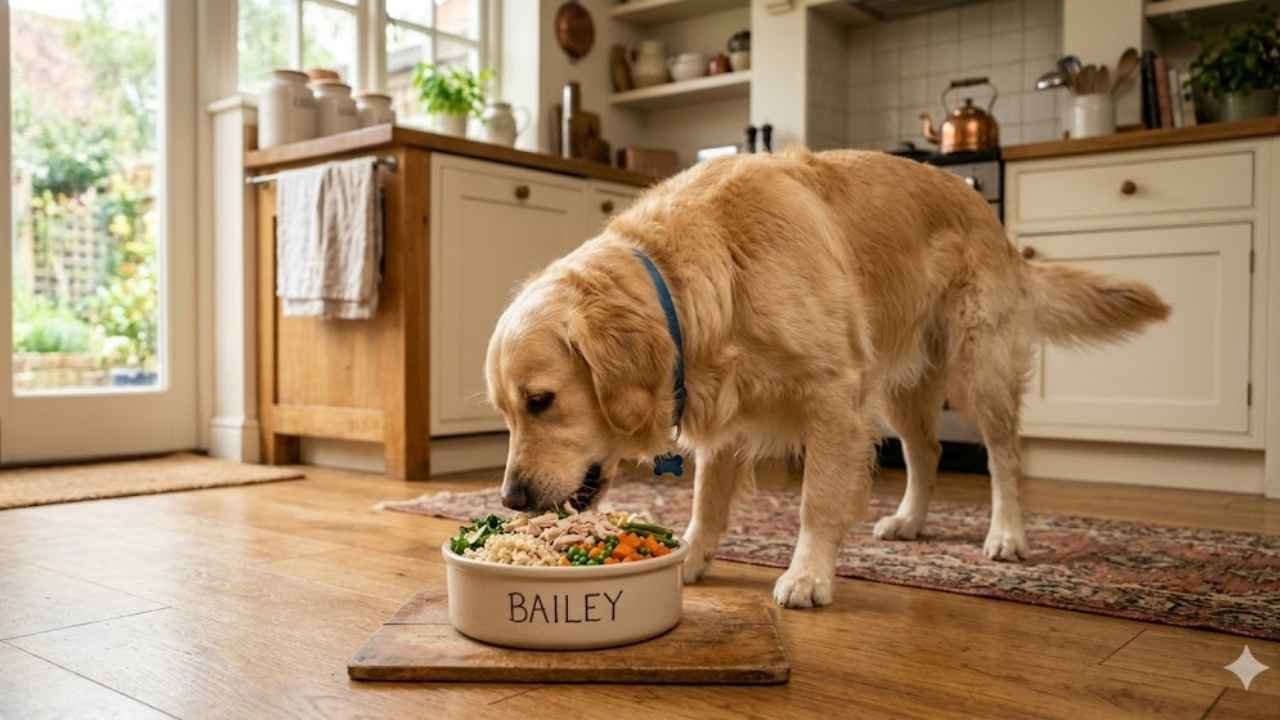
Making homemade dog food for golden retrievers ensures control over every dog food ingredient. You can avoid harmful additives, fillers, or preservatives found in some commercial foods. A healthy dog meal plan tailored to your pet’s needs supports weight management, digestive health, and longevity. Preparing meals at home strengthens the bond between you and your golden retriever, creating trust and joy at mealtime.
Homemade meals allow customized nutrition for your dog. You can adjust protein, carbs, and fats for puppies, adults, or seniors. It also helps in managing food allergies and sensitive stomachs, allowing you to eliminate common allergens like gluten or soy. By cooking fresh vet-approved dog food recipes, you provide meals that are not only safe but also flavorful, keeping your dog happy and healthy.
Better Ingredient Quality and Control
When preparing meals at home, you can select fresh meats, whole grains, and vegetables. This avoids preservatives and additives, making a safer and more digestible natural dog food diet. Monitoring dog food ingredient measurement ensures every portion is accurate and meets dog calorie intake goals.
Customized Nutrition for Your Dog
Every golden retriever has unique dietary needs. Puppies need higher protein, while seniors may require joint-support nutrients. Homemade recipes allow you to adjust ingredients according to age, weight, and activity, forming a golden retriever diet plan that maximizes health and energy.
Managing Allergies and Sensitive Stomachs
Many dogs react to fillers or artificial flavors. By preparing healthy homemade dog meals, you can eliminate allergens and maintain your dog’s digestive health. Substituting safe ingredients improves stool quality, reduces gas, and prevents skin irritation.
Ingredients to Include in Homemade Dog Food

Selecting the right dog food ingredients is essential. Proteins, carbs, vegetables, and fruits must all be part of a balanced dog diet. Fresh ingredients maximize nutrient retention, and using homemade dog food recipes ensures variety and appeal. Measuring portions carefully with a dog feeding schedule avoids overfeeding.
Best Protein Sources (Chicken, Beef, Fish)
Lean meats such as chicken, turkey, and beef provide essential amino acids. Fish like salmon are rich in healthy fats for dogs. Eggs are also excellent additions to a homemade dog food recipe. Including different proteins keeps meals diverse and supports muscle health.
Healthy Carbohydrates (Rice, Oats, Sweet Potato)
Complex carbs like brown rice for dogs, oats, and sweet potatoes for dogs offer energy and fiber. They are slowly digested, keeping golden retrievers full and active. Proper carb portions are part of a healthy dog meal plan.
Vegetables and Fruits Safe for Dogs
Vegetables for dogs, like peas, carrots, and spinach, provide essential fiber. Fruits such as blueberries, apples, and pumpkin deliver antioxidants and vitamins to dogs. Combining these ingredients supports immunity, digestion, and overall vitality.
Ingredients to Avoid in Homemade Dog Food
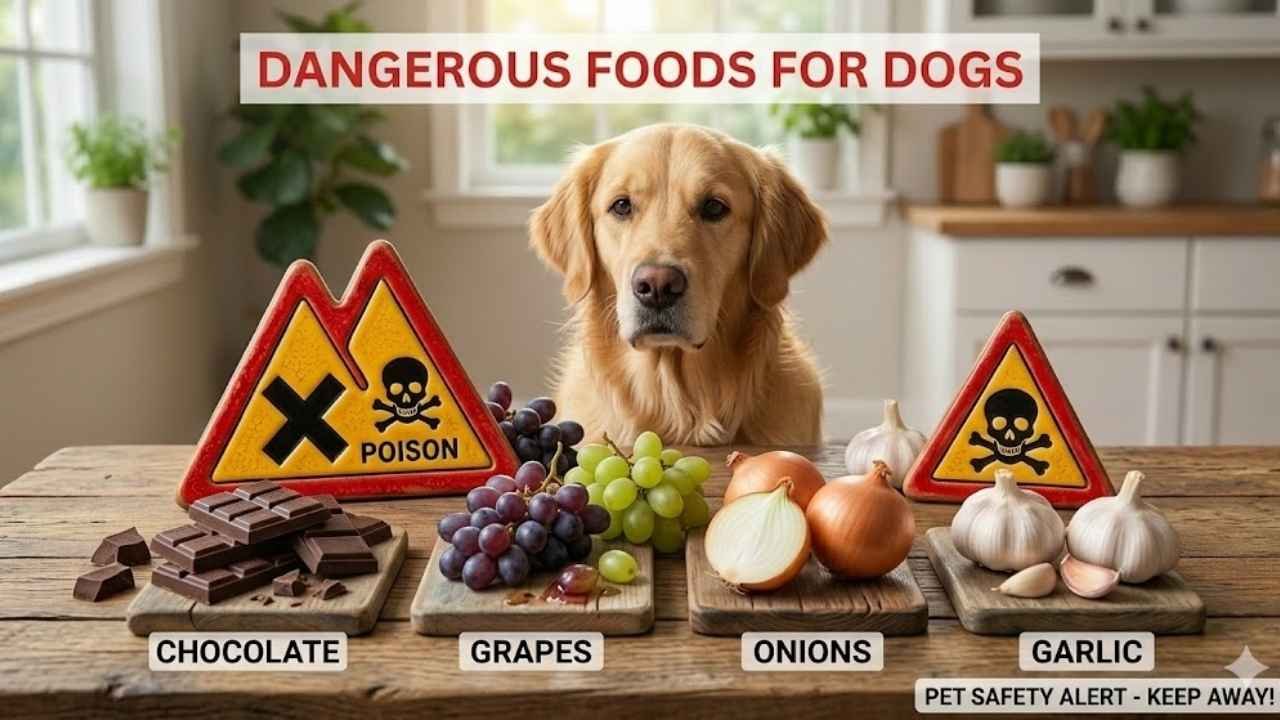
Some foods are unsafe for dogs. Chocolate, onions, garlic, grapes, and macadamia nuts can cause serious illness. Salt, sugar, and artificial sweeteners should also be avoided. Avoiding harmful additives ensures homemade dog food safety and protects the dog’s digestive health.
Toxic Foods for Dogs
Chocolate, grapes, raisins, onions, and garlic are toxic and must never be included. Even small amounts can harm your golden retriever.
Harmful Seasonings and Additives
Excess salt, sugar, and artificial flavorings can disrupt digestion or cause long-term health problems. Focus on fresh, natural ingredients.
Easy Homemade Dog Food Recipes for Golden Retrievers
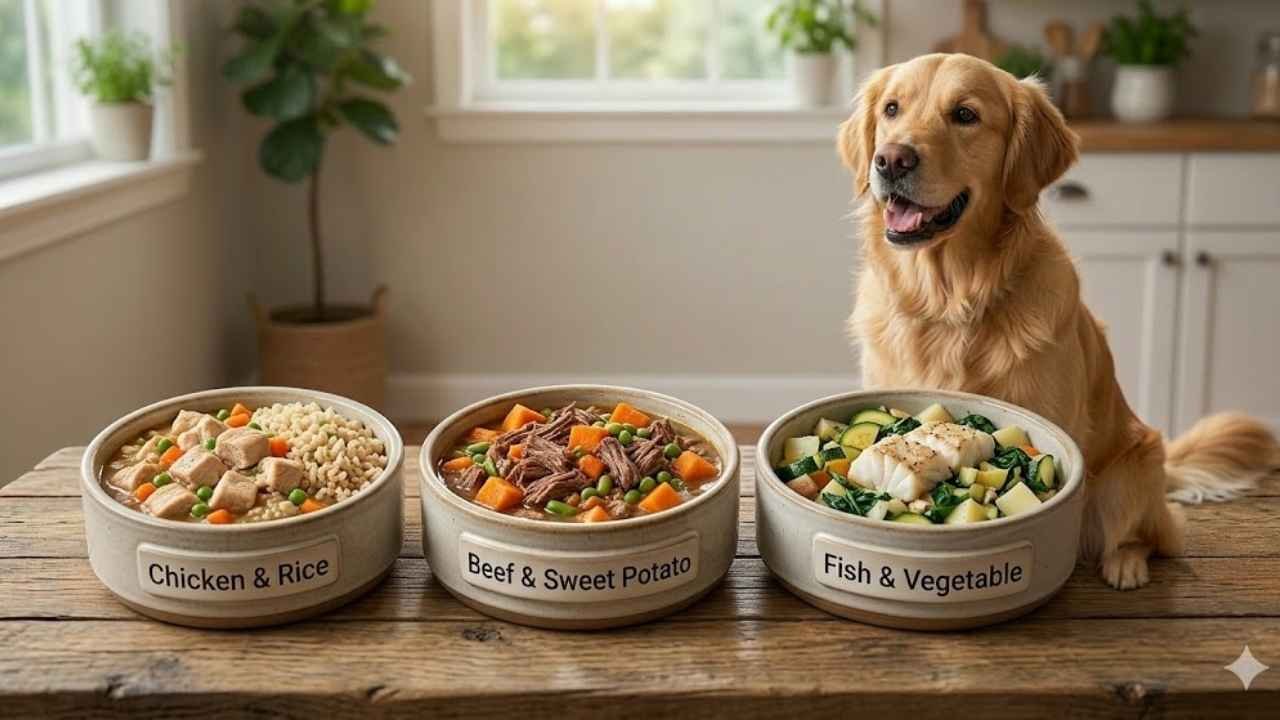
Cooking at home is easier than it seems. Homemade dog food recipes can be simple and quick, yet highly nutritious. Use fresh ingredients, measure carefully, and follow vet-approved dog food recipes for the best results.
Chicken and Brown Rice Recipe
Combine ground chicken, brown rice for dogs, carrots, peas, and water. Cook until the rice is soft and the chicken is fully cooked. Add a small amount of salmon oil for dogs for healthy fats. Portion according to the dog food portion size.
Beef and Sweet Potato Recipe
Brown lean beef and combine it with diced sweet potatoes for dogs, green beans, and carrots. Simmer until vegetables are tender. This beef and sweet potato dog food is excellent for energy and fiber.
Fish and Vegetable Recipe
Steam or lightly cook fish with broccoli, spinach, and rice. Mix well with coconut oil for dogs. This fish and vegetable dog food is rich in omega-3s and antioxidants for coat and joint health.
How to Prepare Homemade Dog Food Safely

Preparing meals safely is essential. Always wash hands, utensils, and surfaces. Use fresh ingredients, cook meat thoroughly, and store meals promptly. Avoid cross-contamination to maintain homemade dog food safety and dog digestive health.
Cooking Methods and Food Safety
Boiling, steaming, or baking preserves nutrients. Avoid overcooking proteins, as it reduces quality. Following the dog’s ingredient measurement ensures each meal is balanced.
Portion Sizes for Golden Retrievers
Calculate portions based on dog calorie intake and weight. Puppies require smaller, more frequent meals, while adults can have larger portions. Use a dog feeding schedule for consistency.
Transitioning Your Golden Retriever to Homemade Food
Switching diets should be gradual. Mixing new healthy homemade dog meals with kibble over 7–10 days prevents digestive upset. Monitor your dog’s health, stool, and energy levels during this transition.
Gradual Transition Plan
Start with 25% homemade food, increasing weekly until fully transitioned. This method reduces stress on your dog’s digestive health and helps your golden retriever adapt comfortably.
Signs Your Dog Is Adjusting Well
Healthy stools, regular energy, and stable weight are good indicators. Any vomiting or diarrhea should prompt a consultation with a veterinary nutritionist.
Storing and Serving Homemade Dog Food
Proper storage ensures freshness. Use airtight containers in the refrigerator for up to five days. Freezing meals preserves nutrients for up to three months. Always thaw in the fridge and check the dog food portion size before serving.
Proper Storage in Fridge or Freezer
Refrigerator storage for dog food keeps meals safe in the short term. For long-term freezing, homemade dog food is recommended. Portioning into daily servings saves time and prevents spoilage.
Reheating and Serving Tips
Serve meals at room temperature or warm them slightly. Avoid overheating, as it reduces healthy fats for dogs and vitamins.
Common Mistakes When Feeding Homemade Dog Food
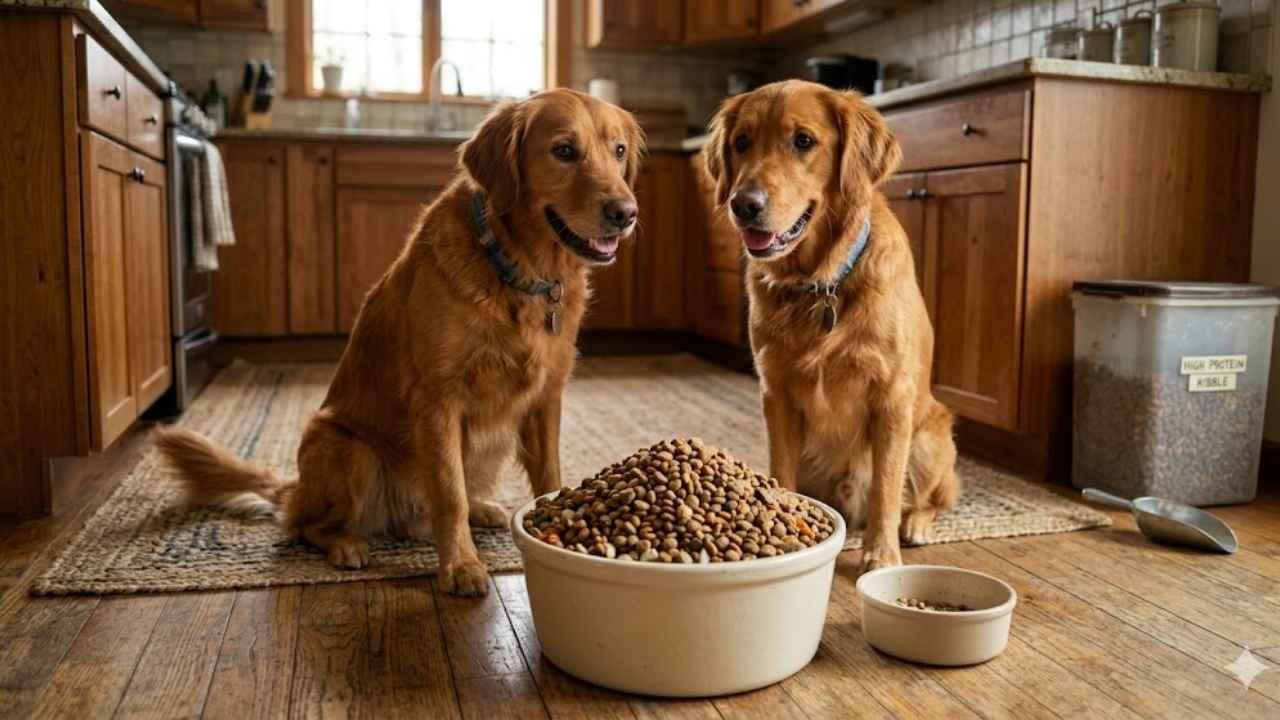
Many owners make mistakes like overfeeding, underfeeding, or neglecting supplements. Ignoring dog calorie intake or using incomplete ingredients can lead to deficiencies and health issues. Following a golden retriever diet plan prevents these problems.
Nutritional Imbalance
Skipping essential proteins, carbs, or vitamins and minerals for dogs causes weakness and poor coat health.
Overfeeding or Underfeeding
Use a dog feeding schedule and calculate dog food portion size carefully to maintain ideal weight and energy.
H2: FAQs About Whether Golden Retrievers Aggressive
H4: What is the healthiest food for a golden retriever?
The healthiest food includes lean proteins like chicken or fish, complex carbs such as brown rice for dogs and sweet potatoes for dogs, and vegetables like spinach or carrots, all combined in balanced homemade dog food recipes.
H4: What homemade food is good for Golden Retrievers?
Good homemade options include chicken dog food recipes, beef and sweet potato dog food, and fish and vegetable dog food, ensuring protein, carbs, and essential vitamins and minerals are balanced.
H4: Do vets recommend homemade dog food?
Yes, veterinarians often recommend homemade dog food recipes if they are complete, balanced, and created in consultation with a veterinary nutritionist. Proper portioning and quality ingredients are key.
H4: What dog food is good for skin allergies?
Limited ingredient diets with single proteins, such as salmon or chicken, plus healthy fats for dogs, like salmon oil or coconut oil, can reduce skin irritation and allergic reactions.
H4: What foods stop dogs from itching?
Omega-3-rich foods, pumpkin, sweet potatoes, and hypoallergenic proteins help reduce itching. Avoid common allergens like soy, wheat, and dairy for sensitive golden retrievers.
Conclusion
Creating homemade dog food for golden retrievers allows control over nutrition, ingredients, and health outcomes. Balanced meals, proper portioning, and gradual transitions ensure your pet thrives. Always consult a veterinary nutritionist for specific concerns, and enjoy feeding your golden retriever meals made with love.
For more guidance, check these trusted sources:
American Kennel Club – Homemade Dog Food
PetMD – Homemade Dog Food Safety
Balance IT – Canine Supplements


Hi colleagues, pleasant piece of writing and fastidious arguments commented at this place, I am truly enjoying by these.
Lots of great info here, but do you have the recipe for these?