

The Golden Retriever is one of the most loved family dogs in the United States. People admire this breed for its gentle nature, intelligence, and strong loyalty. However, like all dog breeds, Goldens are prone to certain medical conditions. Understanding Golden Retriever health issues helps owners notice problems early and give their dogs the best possible care.
Many owners often ask how long Golden Retrievers live. In most cases, the average lifespan of Golden Retrievers is around 10 to 12 years. Genetics, lifestyle, and environment all influence Golden Retriever life expectancy. These factors affecting Golden Retriever lifespan include nutrition, exercise, and regular veterinary care. When owners focus on good habits and preventive care, they can improve Golden Retriever longevity and support a healthy life for their dogs.
Recognizing common Golden Retriever health problems early can make a huge difference. Small changes such as reduced activity, appetite loss, or skin irritation may signal underlying Golden Retriever diseases. By learning about these conditions and following a consistent Golden Retriever wellness routine, owners can protect their dog’s health and maintain a better Golden Retriever quality of life.
| Health Factor | Why It Matters |
|---|---|
| Genetics | Influences inherited diseases |
| Nutrition | Supports immunity and energy |
| Exercise | Maintains a healthy weight and joints |
| Veterinary care | Detects disease early |
A balanced diet, daily activity, and routine checkups all contribute to a stronger Golden Retriever’s healthy lifestyle.
Why Golden Retrievers Are Prone to Health Issues

Golden Retrievers were originally bred as hunting and retrieving dogs in Scotland. Breeders focused on temperament, intelligence, and athletic ability. However, this selective breeding also increased the chance of certain inherited conditions. Because of this history, some Golden Retriever diseases appear more often in this breed.
Veterinary experts frequently emphasize responsible dog breeding practices. Health testing and genetic screening help reduce the risk of inherited disorders. When breeders follow these practices, puppies have a better chance of living long and healthy lives.
Environmental factors also play a role in health. Proper Golden Retriever nutrition, daily exercise, and consistent Golden Retriever preventive care support the immune system and reduce disease risks. Regular veterinary checkups are especially important for detecting issues early. Maintaining healthy habits from puppyhood helps protect the Golden Retriever’s longevity and supports long-term well-being.
Bone and Joint Problems in Golden Retrievers
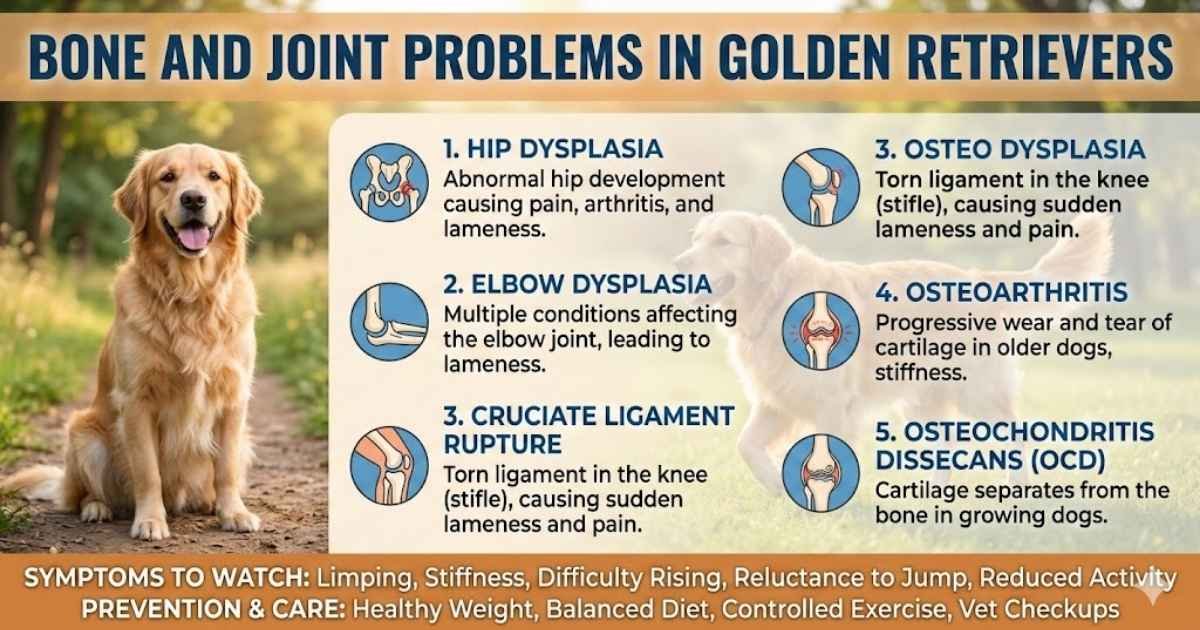
Large and active breeds often experience Golden Retriever joint problems because their bodies place extra pressure on bones and cartilage. Running, jumping, and aging gradually affect joint health.
Owners may first notice stiffness after rest in dogs or mild limping in Golden Retrievers. These early signs suggest that joints may be inflamed or weakened. Providing Golden Retriever mobility support, such as controlled exercise and joint supplements for dogs, can help reduce discomfort and protect movement.
Hip Dysplasia
One of the most common Golden Retriever health issues is hip dysplasia in Golden Retrievers. This condition occurs when the hip joint forms improperly, causing the bones to move loosely inside the socket. Over time, this friction damages cartilage and leads to Golden Retriever arthritis.
Dogs with hip dysplasia often struggle with stairs or jumping. They may also appear stiff or tired after exercise. Maintaining proper Golden Retriever weight management is one of the best ways to reduce stress on the hips.
| Symptom | What Owners May Notice |
|---|---|
| Stiffness after rest in dogs | dog moves slowly after sleeping |
| limping in Golden Retrievers | uneven walking pattern |
| reduced activity | reluctance to play or run |
Veterinarians often recommend physical therapy and joint supplements for dogs to improve comfort and mobility.
Elbow Dysplasia
Another inherited disorder is elbow dysplasia in Golden Retrievers. This condition affects the front legs and develops when the elbow bones grow abnormally during puppyhood.
Dogs with elbow dysplasia may show reduced activity, discomfort, or occasional lethargy in dogs. Treatment may include medication, therapy, and controlled exercise. Early diagnosis and treatment help protect joint function and support a more active life.
Ruptured Cranial Cruciate Ligament
Athletic dogs sometimes suffer cranial cruciate ligament injury (CCL), which affects the knee joint. This injury often occurs during sudden running or jumping.
Dogs with this injury usually show sudden limping in Golden Retrievers and may avoid putting weight on the affected leg. Surgery followed by rehabilitation is often necessary to restore normal movement.
Proper Golden Retriever exercise and weight management reduce the risk of this injury.
Cancer in Golden Retrievers

Cancer is unfortunately one of the most serious Golden Retriever health issues. Research shows that Goldens have a higher cancer risk compared to many other breeds.
Owners should watch for warning signs such as lumps and bumps in dogs, unexplained weight loss in dogs, or unusual lethargy in dogs. Early detection is essential for improving treatment success and extending the Golden Retriever lifespan.
Lymphoma
Lymphoma in Golden Retrievers is a cancer that affects the lymph nodes and immune system. Swollen glands around the neck or chest are common symptoms. Treatment often includes chemotherapy. Early treatment can significantly extend a dog’s life.
Hemangiosarcoma
Another aggressive cancer is hemangiosarcoma in dogs, which affects blood vessels. It commonly develops in the spleen or heart.
Because this cancer grows silently, dogs sometimes collapse suddenly due to internal bleeding. Quick veterinary care is essential.
Spleen Tumors
Splenic tumors occur mostly in older dogs. Some tumors are benign, while others are related to hemangiosarcoma in dogs. Symptoms may include weakness and pale gums.
Routine veterinary exams help detect these tumors earlier.
Testicular Cancer
Unneutered male dogs have a higher risk of testicular cancer. Neutering is often recommended as a preventive measure.
This simple procedure can reduce the risk of several Golden Retriever diseases.
Heart Disease in Golden Retrievers

Heart disorders are another group of Golden Retriever health issues. Some conditions appear at birth, while others develop with age.
Owners may notice symptoms such as reduced stamina or lethargy in dogs. These signs could indicate Golden Retriever heart disease.
Subaortic Stenosis
One congenital condition is subvalvular aortic stenosis (SAS). In this disease, the aorta narrows and restricts blood flow from the heart.
Dogs with this condition may faint during exercise or show weakness. Early diagnosis allows veterinarians to monitor heart function closely.
Other Heart Conditions
Golden Retrievers may also develop dilated cardiomyopathy (DCM), which weakens the heart muscle.
More information about heart disease in dogs is available here:
Heart Disease in Dogs – Merck Veterinary Manual
Monitoring heart health through regular exams helps protect long-term well-being.
Skin Allergies and Skin Conditions

Many Golden Retriever health issues involve skin irritation. Their thick double coat traps moisture and allergens.
Dogs with Golden Retriever skin allergies often experience itching and paw licking in dogs, redness, or irritated skin.
Environmental Allergies
Environmental allergens such as pollen or dust mites can trigger skin reactions.
Regular bathing and proper parasite prevention for dogs help reduce these reactions.
Food Allergies
Some Golden Retrievers react to specific food ingredients. Symptoms may include chronic itching and digestive upset.
Switching to a carefully balanced, healthy dog diet highin protein often helps identify and manage food allergies.
Hot Spots
Hot spots are painful skin infections caused by scratching or trapped moisture.
Following a consistent Golden Retriever grooming routine helps prevent these infections.
If your dog develops a strong odor or oily fur, you can read more about common causes here:
Why Do Golden Retrievers Smell?
Ear Infections and Ear Problems
Because of their floppy ears, Goldens often develop Golden Retriever ear infections. Moisture trapped inside the ear canal allows bacteria and yeast to grow.
Signs include ear odor in dogs, head shaking, and scratching. Cleaning ears regularly as part of a Golden Retriever grooming routine helps prevent infections.
Eye Problems in Golden Retrievers
Eye disorders are another category of Golden Retriever health issues. Early screening protects vision and improves overall comfort.
Regular veterinary exams are an important part of Golden Retriever preventive care.
Cataracts
Cataracts occur when the lens of the eye becomes cloudy. Dogs may have difficulty seeing clearly, especially in dim lighting.
Surgery can sometimes restore vision.
Progressive Retinal Atrophy (PRA)
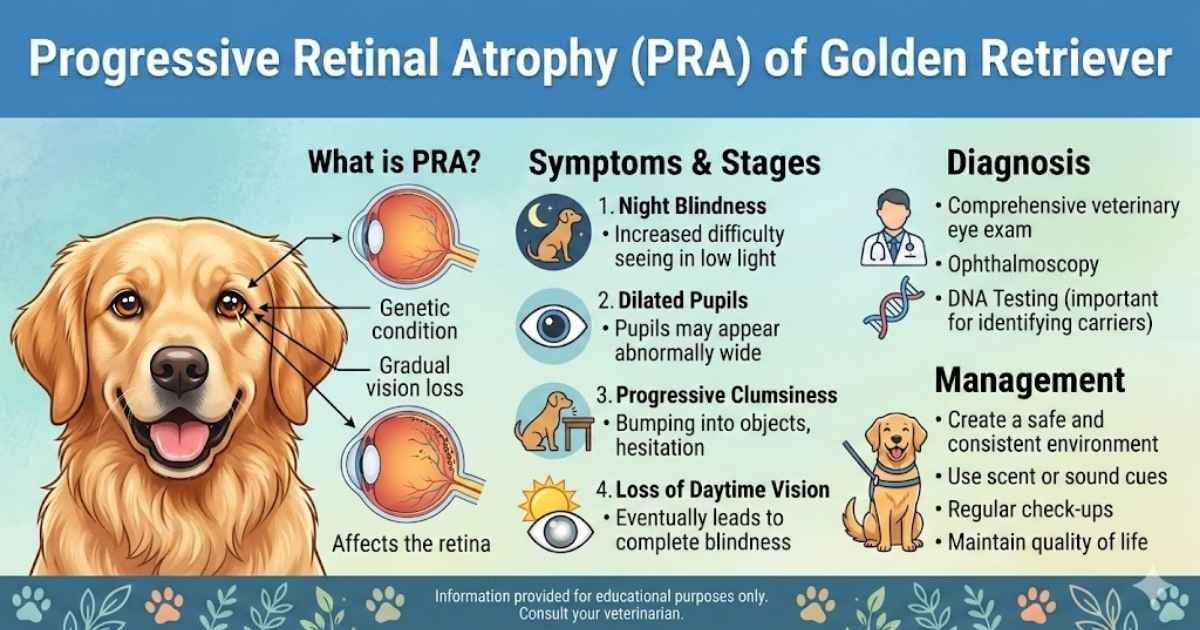
This inherited disease gradually damages retinal cells and eventually causes blindness.
Responsible breeding programs screen dogs for PRA to reduce its occurrence.
Hormonal Disorders
Hormonal conditions can affect metabolism and energy levels. These disorders are common in aging dogs.
Routine blood testing helps veterinarians detect these problems early.
Hypothyroidism
Hypothyroidism occurs when the thyroid gland produces too little hormone. Dogs often gain weight and develop dull coats.
Treatment usually involves medication and balanced Golden Retriever nutrition.
Cushing’s Disease
Cushing’s disease occurs when the body produces too much cortisol.
Dogs with this condition may drink excessive water and develop abdominal swelling.
Early treatment supports healthier senior Golden Retriever health.
Metabolic Diseases in Golden Retrievers
Metabolic disorders affect how the body regulates sugar and energy. These illnesses can significantly impact Golden Retriever longevity.
Diabetes Mellitus
Diabetes prevents the body from properly controlling blood sugar levels.
Symptoms include increased thirst and weight loss in dogs.
Treatment usually involves insulin therapy and careful diet control.
Insulinoma
Insulinoma is a rare tumor affecting the pancreas.
It causes dangerously low blood sugar and may lead to weakness or seizures.
Digestive Emergency – Bloat (Gastric Dilatation-Volvulus)
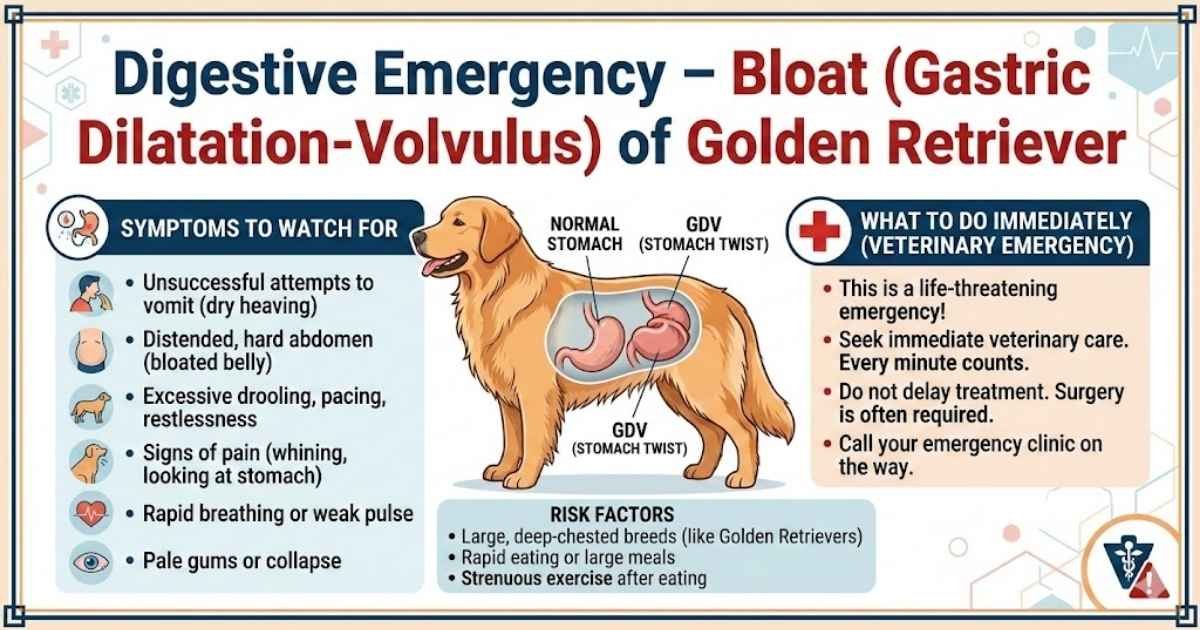
Bloat is one of the most dangerous Golden Retriever health issues. The stomach fills with gas and twists, blocking blood flow.
Dogs may appear restless and develop a swollen abdomen. Immediate veterinary care is essential because this condition can become fatal quickly.
Obesity and Weight-Related Health Issues
Golden Retrievers love food and can gain weight easily. Poor Golden Retriever weight management increases the risk of diabetes, joint problems, and heart disease.
| Healthy Habit | Benefit |
|---|---|
| balanced Golden Retriever nutrition | supports metabolism |
| regular Golden Retriever exercise needs | strengthens muscles |
| routine weight checks | prevents obesity |
Maintaining a healthy weight improves comfort and supports Golden Retriever longevity tips.
Other Health Problems in Golden Retrievers
Several additional conditions can affect Golden Retrievers, although they occur less frequently.
Kidney Disease
Kidney disease often affects older dogs and may cause excessive thirst or fatigue.
Liver Disease
Liver problems can lead to appetite loss, vomiting, or yellowing of the eyes.
Blood Clotting Disorders
Some inherited conditions affect the body’s ability to clot blood properly.
Lymph Node Disease
Swollen lymph nodes may signal infection or immune problems.
Myasthenia Gravis
This rare condition affects nerve signals and causes muscle weakness.
Preventive Care Tips for Golden Retriever Health
Preventing Golden Retriever health issues requires consistent attention and care. A structured Golden Retriever wellness routine helps maintain overall health.
Balanced diet, regular exercise, and routine checkups support the Golden Retriever’s healthy aging. Dental care is also important because research links dog dental health and kidney disease in older dogs.
When to See a Veterinarian
Owners should contact a veterinarian if they notice unusual symptoms such as lumps and bumps in dogs, severe lethargy in dogs, or sudden weight loss in dogs.
Early veterinary care helps detect illness quickly and improves the Golden Retriever’s life expectancy. With proper attention and preventive care, Golden Retrievers can live long, happy lives with their families.
FAQs About Golden Retriever Health Issues
Do Golden Retrievers have lots of health problems?
Yes, Golden Retrievers are prone to several common health issues, including joint problems, cancer, and skin conditions.
What is the main cause of death of Golden Retrievers?
Cancer is the leading cause of death in Golden Retrievers, often detected in middle to senior age.
What is the life expectancy for a Golden Retriever?
The average lifespan of Golden Retrievers is 10–12 years, depending on genetics, lifestyle, and care.
How common is cancer in Golden Retrievers?
Cancer is very common, affecting around 60% of Golden Retrievers at some point in their life.
What is the silent killer in Golden Retrievers?
Heart disease, especially subvalvular aortic stenosis (SAS), is considered a silent killer in this breed.
This website is independently created to provide educational and informational content about Golden Retrievers. To learn more about our mission and website policies, please visit our About Us, Privacy Policy, Terms & Conditions, and Contact Us pages.