

Raising a golden retriever puppy is one of the most joyful experiences a dog lover can have. These friendly dogs are known for their loyalty, intelligence, and loving nature. However, bringing home a young puppy also means learning proper golden retriever puppy care, building a routine, and staying patient during the early training stages.
Golden Retrievers grow quickly, so early puppy training and healthy puppy socialization play a big role in shaping their behavior. With the right preparation, your puppy will develop into a confident and well-mannered companion. Understanding feeding, exercise, and daily routines helps make raising a golden retriever puppy easier and more rewarding for first-time dog owners and experienced families alike.
What to Expect When Raising a Golden Retriever Puppy

When you begin raising a golden retriever puppy, expect energy, curiosity, and constant learning. These puppies are friendly and eager to please. However, they also explore everything with their mouths and paws. This phase includes chewing, accidents, and bursts of excitement. Understanding golden retriever puppy behavior helps you stay patient during this early stage.
Golden Retrievers are intelligent working dogs originally bred for retrieving game. Because of this history, they require both physical activity and mental challenges. Without stimulation, boredom can lead to destructive habits. Providing proper puppy exercise and structured puppy training keeps your dog happy and prevents problem behavior.
| Trait | What It Means for Owners |
|---|---|
| High Intelligence | Needs mental stimulation |
| Friendly Nature | Excellent family companion |
| High Energy | Requires daily exercise |
| Loyal Personality | Forms strong family bonds |
Preparing Your Home for a Golden Retriever Puppy

Before starting the journey of raising a golden retriever puppy, preparing your home makes the transition smoother. Puppies investigate everything. That means electrical cords, shoes, and houseplants become instant toys. Creating a safe environment protects your puppy and prevents accidents.
Many experts recommend “puppy-proofing” the house. Remove objects that could harm a curious dog. Store cleaning products safely. Secure trash cans. According to the American Kennel Club, safe home preparation greatly reduces early training problems. You can learn more at https://www.akc.org.
Common household hazards include the following items:
| Household Item | Risk |
|---|---|
| Chocolate | Toxic to dogs |
| Electrical cords | Chewing hazard |
| Small toys | Choking risk |
| Toxic plants | Poisoning danger |
Providing a calm sleeping space and a designated play area also helps when raising a golden retriever puppy.
Essential Supplies for a Golden Retriever Puppy
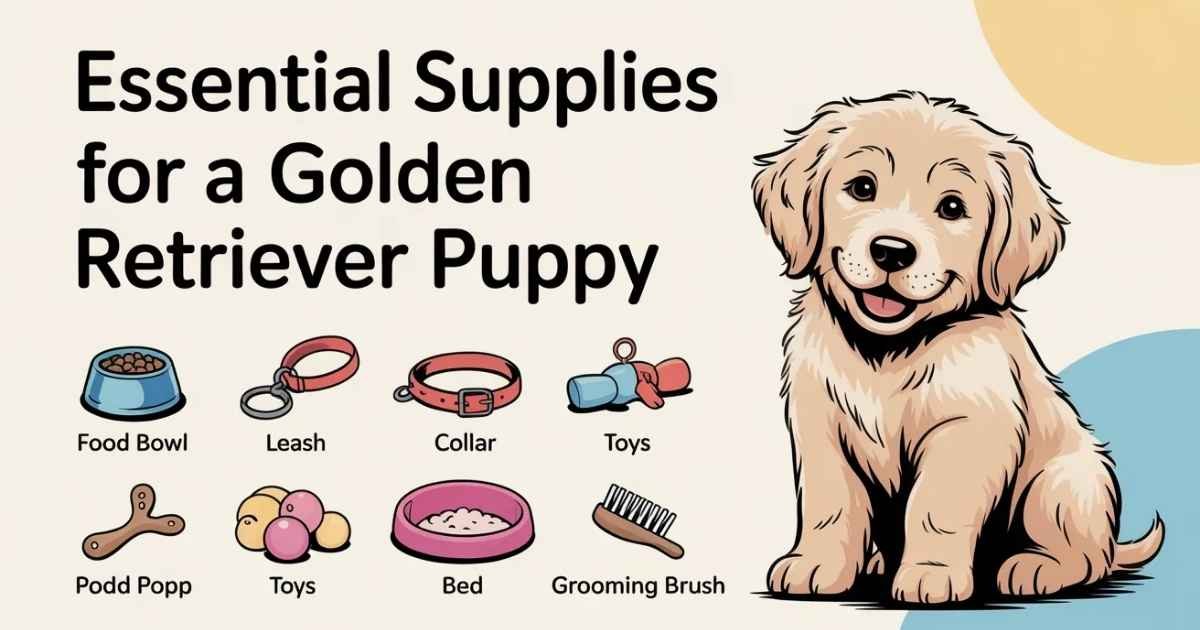
Buying the right supplies simplifies the process of raising a golden retriever puppy. Puppies require comfort, safety, and enrichment. Basic tools allow you to maintain proper golden retriever puppy care from the first day at home.
Important items include food bowls, grooming brushes, a durable crate, and safe chew toys. Quality toys help reduce destructive chewing during teething. Many veterinarians recommend durable toys like KONG products because they encourage healthy chewing habits.
| Essential Item | Purpose |
|---|---|
| Food and water bowls | Daily feeding |
| Puppy crate | Safe sleeping area |
| Grooming brush | Coat maintenance |
| Chew toys | Teething relief |
Proper supplies make puppy training easier and create a predictable routine for your dog.
Bringing Your Golden Retriever Puppy Home for the First Time

The first day of raising a golden retriever puppy can feel overwhelming for the puppy. Everything is new. The smells, sounds, and people may feel confusing. Keeping the first day calm helps the puppy feel secure.
Allow your puppy to explore slowly. Avoid introducing too many visitors immediately. Young dogs benefit from gentle introductions to family members and quiet time to adjust. Many trainers recommend placing the puppy crate near the family area so the dog feels included.
If you already have pets, introduce them slowly. The Humane Society of the United States recommends neutral meeting areas to avoid territorial behavior. Their guide can be found at https://www.humanesociety.org.
Gradual introductions support smoother puppy socialization.
Golden Retriever Puppy Feeding Guide
Feeding correctly plays a critical role when raising a golden retriever puppy. Growing dogs require balanced nutrition with protein, healthy fats, and vitamins. Choosing high-quality puppy food ensures proper bone development and strong immunity.
Most veterinarians recommend feeding young puppies three to four times daily. As the puppy grows, feeding frequency decreases. Balanced meals prevent overeating while supporting steady growth.
| Age | Meals Per Day |
|---|---|
| 8–12 weeks | 4 meals |
| 3–6 months | 3 meals |
| 6–12 months | 2 meals |
Veterinary nutrition guidelines are explained in detail by the American Veterinary Medical Association at https://www.avma.org. Following expert guidance helps ensure proper golden retriever puppy nutrition.
Golden Retriever Puppy Training Basics

Training is one of the most important parts of raising a golden retriever puppy. Early learning shapes lifelong habits. Because Golden Retrievers are intelligent, they respond extremely well to positive training methods.
Successful puppy training focuses on repetition and rewards. Dogs learn faster when they receive praise, treats, and encouragement. Harsh punishment often damages trust and slows learning.
Important commands every puppy should learn include sit, stay, come, and leave it. Teaching these commands builds communication between you and your dog. Consistency is the real secret behind successful golden retriever puppy training.
Crate Training a Golden Retriever Puppy
Many professional trainers strongly recommend crate training during the process of raising a golden retriever puppy. A crate becomes a comfortable personal space where the puppy can rest and feel secure.
Contrary to some myths, crate training is not cruel when used correctly. It mimics the natural den environment dogs enjoy. Puppies quickly learn that their crate is a quiet place for sleeping and relaxing.
| Benefit | Explanation |
|---|---|
| Safety | Prevents chewing hazards |
| Potty training | Encourages bladder control |
| Routine | Helps create a sleep schedule |
Introducing the crate gradually with treats and praise makes the transition easier for the puppy.
Potty Training a Golden Retriever Puppy

Potty training is often the biggest challenge when raising a golden retriever puppy. Young puppies have small bladders and limited control. Accidents will happen. Patience and consistency are essential during this learning stage.
Most trainers recommend taking the puppy outside every 30–60 minutes. Praise the puppy immediately after successful bathroom trips. Dogs learn quickly when rewards follow the correct behavior.
Cleaning accidents thoroughly removes odor signals that might encourage repeat accidents. Using pet-safe cleaners improves the success of puppy potty training.
Socializing Your Golden Retriever Puppy
Proper puppy socialization helps your dog grow into a confident adult. When raising a golden retriever puppy, exposing them to new environments prevents fear and anxiety later in life.
Introduce your puppy to different people, sounds, and locations. Visits to parks, sidewalks, and pet-friendly stores create valuable experiences. Puppies who meet many friendly people often develop calm and relaxed personalities.
Veterinary behaviorists emphasize that early puppy socialization reduces aggressive behavior in adult dogs. Safe exposure builds emotional stability and improves adaptability.
How to Stop Golden Retriever Puppy Biting and Chewing
Chewing and biting are natural behaviors during the raising of a golden retriever puppy. Puppies explore their world through their mouths. Teething discomfort also increases chewing.
Providing durable chew toys gives puppies safe outlets for this instinct. When puppies bite furniture or hands, redirecting them toward toys teaches appropriate behavior.
Consistency remains the key to managing puppy chewing behavior. Dogs gradually learn which objects belong to them and which do not.
Golden Retriever Puppy Growth Stages and Milestones
Growth happens rapidly when raising a golden retriever puppy. Puppies gain weight quickly and develop new behaviors every few weeks. Understanding growth stages helps owners adjust training and feeding routines.
| Age | Development |
|---|---|
| 2 months | Learning basic commands |
| 4 months | Improved bladder control |
| 6 months | Increased independence |
| 12 months | Near adult size |
Tracking these milestones ensures healthy progress and helps identify potential health concerns early.
Exercise and Playtime Needs for Golden Retriever Puppies

Regular puppy exercise keeps your dog physically and mentally healthy. Golden Retrievers are energetic working dogs. Without exercise, boredom can lead to destructive habits.
Short walks, play sessions, and interactive games provide the necessary stimulation. Training games also strengthen your bond while teaching discipline.
Veterinarians recommend avoiding excessive exercise for young puppies because developing joints remain fragile.
Common Health Issues in Golden Retriever Puppies
Responsible owners learn about health risks while raising a golden retriever puppy. Early awareness helps detect issues before they become serious.
Some common conditions include hip dysplasia, skin allergies, and ear infections. Regular veterinary visits help monitor these potential concerns.
Maintaining proper golden retriever puppy care through nutrition, grooming, and exercise significantly reduces long-term health risks.
Creating a Daily Schedule for Your Golden Retriever Puppy
A structured routine simplifies raising a golden retriever puppy. Dogs thrive when they know what to expect throughout the day. Feeding, walking, and training at consistent times helps establish good habits.
Daily routines reduce anxiety and speed up puppy potty training. Dogs also learn faster when training sessions occur at predictable times.
| Time | Activity |
|---|---|
| Morning | Feeding and potty break |
| Afternoon | Play and training |
| Evening | Calm activity and rest |
Predictable routines encourage healthy sleep patterns and balanced energy levels.
Common Mistakes to Avoid When Raising a Golden Retriever Puppy
Many new owners make mistakes when raising a golden retriever puppy simply because they lack experience. Inconsistent rules confuse puppies and slow training progress.
Skipping puppy socialization, ignoring exercise needs, or using harsh punishment can create long-term behavioral problems. Successful owners focus on patience, repetition, and positive reinforcement.
Every puppy learns at a different pace. Staying calm and consistent builds trust. Over time, your puppy grows into a loyal companion that reflects the care and training you invested.
Final Thoughts
The journey of raising a golden retriever puppy requires patience, structure, and daily effort. However, the rewards are enormous. Golden Retrievers grow into loyal, affectionate dogs that bring joy to families for years. With proper golden retriever puppy care, thoughtful puppy training, and consistent routines, your puppy will grow into a confident and loving companion.
FAQs about raising a golden retriever puppy
Is raising a Golden Retriever puppy hard?
It can be challenging at first because puppies need constant attention, training, and supervision, but their friendly nature makes the process rewarding.
What is the 7 7 7 rule for dogs?
The 7-7-7 rule suggests exposing a puppy to 7 new people, 7 places, and 7 experiences regularly to improve confidence and social skills.
What is the silent killer in Golden Retrievers?
Cancer, especially hemangiosarcoma, is often called the “silent killer” in Golden Retrievers because symptoms may appear only in advanced stages.
What not to do with a Golden Retriever puppy?
Avoid harsh punishment, skipping socialization, or leaving the puppy alone for long periods since these can cause anxiety and bad behavior.
What is the hardest part of owning a Golden Retriever?
The hardest part is managing their high energy and daily exercise needs while staying consistent with training and grooming.
This website is independently created to provide educational and informational content about Golden Retrievers. To learn more about our mission and website policies, please visit our About Us, Privacy Policy, Terms & Conditions, and Contact Us pages.