

Choosing your first dog is a big decision, and many people wonder, are Golden Retrievers good for first-time owners? The short answer is yes. Golden Retrievers are widely known for their friendly temperament, intelligence, and eagerness to please, making them one of the most beginner-friendly dog breeds. They tend to get along well with children, other pets, and new people, which helps first-time owners build confidence as they learn the responsibilities of dog ownership.
However, they aren’t completely low-maintenance. Golden Retrievers need regular exercise, training, grooming, and daily interaction to stay happy and healthy. In this guide, you’ll learn the real pros and cons of owning a Golden Retriever, helping you decide whether this popular breed is the right fit for your lifestyle.
In this guide, you’ll learn what it’s really like to own a Golden Retriever as a beginner, including training requirements, exercise needs, costs, common challenges, and who is most likely to succeed with this breed.
Quick Answer: Are Golden Retrievers Good for First-Time Owners?
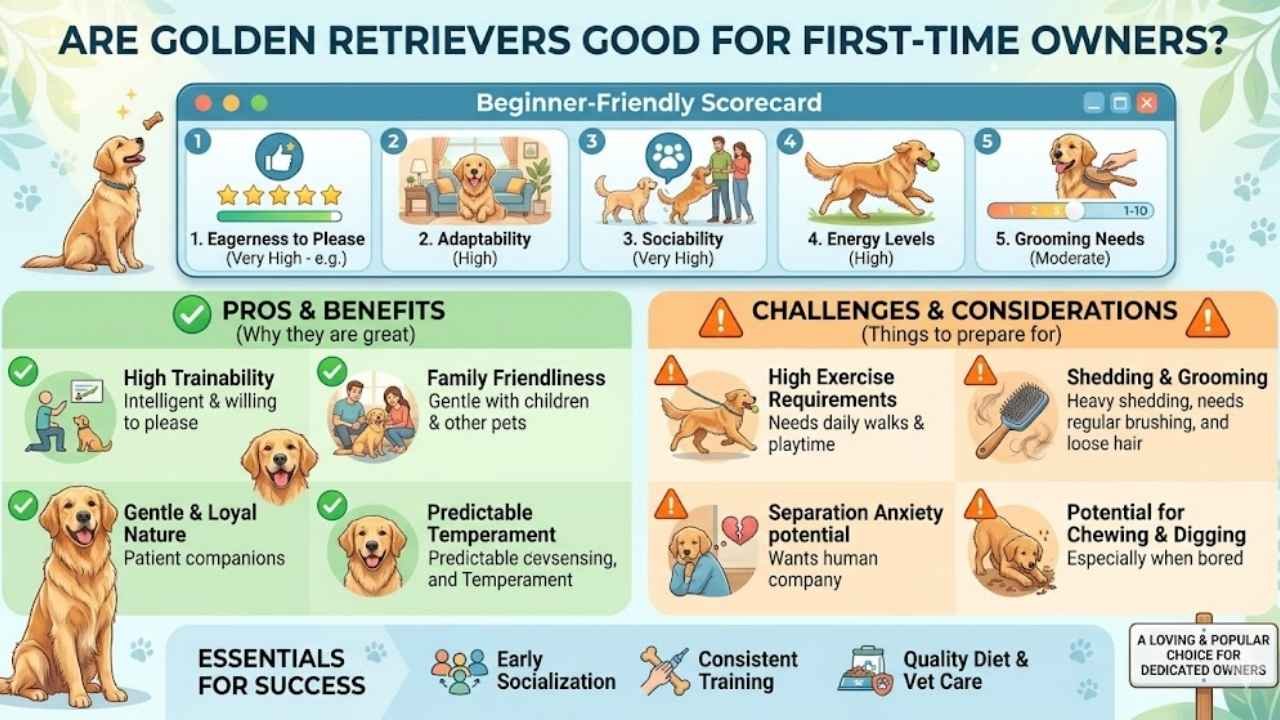
Yes, Golden Retrievers are generally considered one of the best dog breeds for first-time owners. Their friendly temperament, high intelligence, trainability, and strong desire to please make them easier to work with than many other breeds.
However, they aren’t a low-maintenance dog. Golden Retrievers need daily exercise, regular grooming, social interaction, and ongoing training. New owners who can provide those essentials often find them to be rewarding and dependable companions.
Why They’re Often Recommended for Beginners
Several qualities make Golden Retrievers particularly beginner-friendly:
- They learn commands quickly.
- They respond well to positive reinforcement.
- They are usually patient and forgiving of beginner mistakes.
- They tend to be friendly with children and other pets.
- They enjoy spending time with people.
Unlike some independent breeds that prefer doing their own thing, Golden Retrievers usually want to work with their owners. This eagerness to please can make training much smoother for someone raising a dog for the first time.
Situations Where They May Not Be the Best Choice
Despite their popularity, Golden Retrievers aren’t ideal for everyone.
You may struggle with this breed if:
- You’re away from home for long periods every day.
- You want a low-energy dog.
- You dislike dog hair around the house.
- You have very little time for exercise and training.
- You prefer a highly independent pet.
A Golden Retriever thrives when it receives attention, structure, and daily activity. Without those things, behavioral problems can develop.
A Simple Suitability Score for New Owners
| Category | Rating |
|---|---|
| Trainability | Excellent |
| Friendliness | Excellent |
| Family Compatibility | Excellent |
| Grooming Requirements | Moderate |
| Exercise Needs | Moderate to High |
| Beginner Friendliness | Excellent |
| Apartment Suitability | Fair to Good |
| Overall First-Dog Rating | 9/10 |
What Makes Golden Retrievers a Good Choice for First-Time Dog Owners?

Golden Retrievers have earned their reputation for a reason. According to the American Kennel Club breed profile, they were originally developed as sporting dogs and bred to work closely with humans. That history still influences their behavior today.
Friendly and Gentle Temperament
One of the biggest reasons new owners love Golden Retrievers is their temperament.
Most Goldens are naturally
- Friendly
- Social
- Patient
- Affectionate
- Gentle
They generally enjoy meeting new people and tend to be welcoming rather than suspicious. While every dog has its own personality, aggression is not commonly associated with the breed when properly raised and socialized.
This makes them especially appealing to families, couples, and individuals looking for a companion rather than a guard dog.
Highly Intelligent and Easy to Train
Golden Retrievers consistently rank among the most intelligent dog breeds.
Their intelligence isn’t just about learning tricks. It means they often:
- Understand commands quickly
- Learn routines faster
- Adapt well to household rules
- Retain training over time
For first-time owners, this can significantly reduce frustration during the training process.
Eager-to-Please Personality
Some breeds can be stubborn or independent. Golden Retrievers are usually the opposite.
Most Goldens genuinely enjoy making their owners happy. They respond particularly well to:
- Praise
- Treat rewards
- Play-based training
- Positive reinforcement
Because of this, beginners often experience early training success, which builds confidence and strengthens the bond between dog and owner.
Strong Bond With Their Families
Golden Retrievers are known as companion dogs for good reason.
They form strong emotional connections with their families and often want to participate in daily activities. These are among the most common Golden Retriever behaviors owners notice throughout the breed’s life. Whether you’re going for a walk, watching television, or spending time outdoors, your Golden Retriever will likely want to be involved.
This loyalty is one of the breed’s greatest strengths, but it also explains why some develop separation anxiety when left alone for extended periods.
Why They Adapt Well to Most Households
Golden Retrievers can succeed in many different living situations, including:
- Families with children
- Single owners
- Couples
- Active retirees
- Multi-pet households
As long as their physical and mental needs are met, they are generally adaptable and easygoing companions.
Pros of Owning a Golden Retriever as a First-Time Owner

Many first-time owners choose Golden Retrievers because they offer a balance of trainability, affection, and reliability.
Excellent Family Companions
Golden Retrievers have a reputation as one of America’s favorite family dogs.
They typically enjoy being part of everyday family life and often thrive in households where people spend time together.
Usually Great With Children
Many Goldens are naturally patient around children.
That doesn’t mean supervision isn’t necessary. Every interaction between dogs and young kids should be monitored. However, their gentle nature often makes them a good fit for families.
Many parents appreciate that Golden Retrievers are generally tolerant, playful, and eager to participate in family activities.
Friendly Toward Other Dogs and Pets
Compared to breeds with stronger territorial instincts, Golden Retrievers often get along well with:
- Other dogs
- Cats
- Small household pets
Proper introductions and early socialization remain important, but the breed is generally known for being sociable.
Easy to Teach Basic Commands
Many first-time owners are surprised by how quickly Golden Retrievers learn commands such as the following:
- Sit
- Stay
- Come
- Down
- Leave it
Consistent training sessions of just 10 to 15 minutes a day can produce impressive results.
Loyal and Affectionate Nature
If you’re looking for a dog that enjoys spending time with people, a Golden Retriever checks that box.
Many owners describe them as the following:
- Devoted
- Loving
- Affectionate
- People-oriented
Their desire for companionship often creates a strong emotional connection with their families.
Strong Emotional Support and Companionship
Golden Retrievers are frequently used in therapy and service work because of their calm demeanor and ability to connect with people.
While not every Golden becomes a therapy dog, many naturally provide comfort through their affectionate and dependable personalities.
The Challenges First-Time Owners Should Know Before Getting a Golden Retriever

No breed is perfect, and understanding the challenges ahead can prevent disappointment later.
High Energy Levels Require Daily Exercise
Golden Retrievers are active dogs.
Most adults need:
- Daily walks
- Active play sessions
- Mental stimulation
- Opportunities to explore
Without enough activity, boredom can lead to unwanted behaviors such as chewing, digging, or excessive barking.
Heavy Shedding Throughout the Year
One surprise for many new owners is the amount of shedding.
Golden Retrievers have a thick double coat that sheds year-round and often increases during seasonal coat changes.
You’ll likely find dog hair on:
- Furniture
- Clothing
- Carpets
- Car seats
Regular brushing helps, but shedding is simply part of owning this breed.
They Need Consistent Attention and Interaction
Golden Retrievers are social dogs.
They generally don’t enjoy spending long periods alone and often prefer being around people whenever possible.
Owners who work long hours away from home may need to arrange the following:
- Dog walkers
- Doggy daycare
- Family assistance
- Interactive enrichment activities
Separation Anxiety Can Become a Problem
Because of their strong attachment to people, some Golden Retrievers struggle with isolation.
Signs may include:
- Excessive barking
- Destructive chewing
- Pacing
- House-soiling
- Stress-related behaviors
Proper training and gradual independence-building can help reduce these issues.
Large Adult Size Comes With Extra Responsibilities
Golden Retrievers are not small dogs.
Most adults weigh between 55 and 75 pounds.
A larger dog means
- Higher food costs
- Larger equipment and supplies
- More strength to manage during walks
- Greater space requirements
For most owners, these challenges are manageable, but they should be considered before bringing one home.
How Easy Is It to Train a Golden Retriever?
Training is often where Golden Retrievers truly shine. Our complete Golden Retriever training guide covers everything from basic obedience to advanced skills.
Their intelligence, willingness to learn, and desire to please make them one of the most beginner-friendly breeds when it comes to obedience training.
Why Golden Retrievers Learn Quickly
Golden Retrievers were originally bred to work closely alongside humans. Because of this, they tend to pay attention to their owners and enjoy having a job to do.
Many can learn basic commands within a few training sessions when positive reinforcement is used consistently.
Basic Obedience Training for Beginners
New owners should focus on foundational skills first:
- Sit
- Stay
- Come
- Down
- Leave it
- Loose-leash walking
These commands create the foundation for a well-behaved adult dog.
House Training and Crate Training Tips
Most Golden Retriever puppies respond well to a consistent schedule.
Success usually comes from:
- Frequent bathroom breaks
- Predictable feeding times
- Positive reinforcement
- Proper crate introduction
Patience is important. Accidents are a normal part of puppy development.
The Importance of Early Socialization
Socialization is one of the most important investments you can make in your dog’s future behavior. Proper responsible dog socialization helps puppies develop confidence around people, animals, and new environments.
Expose your puppy to:
- Different people
- Friendly dogs
- New environments
- Everyday sounds
- Various surfaces and experiences
Positive early experiences often help create a confident and well-adjusted adult dog.
Common Training Mistakes New Owners Make
Many beginner owners unintentionally slow progress by:
- Being inconsistent with the rules
- Skipping daily training sessions
- Using punishment-based methods
- Expecting results too quickly
- Neglecting socialization
Short, consistent training sessions are usually far more effective than occasional long sessions.
A Golden Retriever’s natural intelligence gives beginners a significant advantage, but success still depends on patience, consistency, and ongoing practice.
Golden Retriever Puppy vs Adult Dog: Which Is Better for First-Time Owners?
Many people assume getting a puppy is the obvious choice, but that’s not always true. If you’re still deciding about bringing home a Golden Retriever puppy, understanding the responsibilities ahead can help you make the right choice. For some first-time owners, an adult Golden Retriever may actually be the easier option.
Both have advantages and challenges. The right choice depends on your lifestyle, schedule, and experience level.
Benefits of Raising a Golden Retriever Puppy
Puppies allow you to shape your dog’s habits from an early age.
Some advantages include:
- Building a bond from day one
- Controlling early socialization
- Teaching household rules from the beginning
- Experiencing all stages of development
Many owners also enjoy watching a puppy grow and mature into an adult companion.
Advantages of Adopting an Adult Golden Retriever
Adult dogs often come with fewer surprises.
In many cases, an adult Golden Retriever may already be
- House trained
- Socialized
- Familiar with basic commands
- Past the destructive chewing phase
If you’re nervous about raising a puppy, adopting an adult dog can significantly reduce the learning curve.
Time Commitment Differences
The biggest difference is time.
A young puppy may need the following:
- Potty breaks every few hours
- Constant supervision
- Daily training sessions
- Frequent socialization experiences
An adult dog usually requires less intensive management.
Which Option Fits Your Lifestyle Best?
Choose a puppy if you have plenty of time available and feel prepared for the challenges involved in raising a Golden Retriever puppy.
- Want to experience the full journey
- Feel comfortable handling puppy challenges
Choose an adult dog if you:
- Prefer a more predictable temperament
- Have a busy schedule
- Want fewer training and housebreaking responsibilities.
For many first-time owners, adopting a well-socialized adult Golden Retriever can be one of the easiest ways to enjoy the breed.
How Much Exercise Does a Golden Retriever Need?
One of the most important things new owners should understand is that Golden Retrievers are active dogs.
Their friendly personality often gets most of the attention, but exercise plays a major role in their physical and mental health.
Daily Physical Activity Requirements
Most healthy adult Golden Retrievers need between 1 and 2 hours of activity each day.
This doesn’t have to come from a single workout session.
A typical day might include:
- A morning walk
- A game of fetch
- Evening playtime
- Short training sessions
Puppies have different exercise needs and should avoid excessive high-impact activity while their joints are still developing.
Why Mental Stimulation Is Just as Important
Physical exercise alone isn’t enough.
Golden Retrievers are intelligent dogs that enjoy learning and problem-solving.
Mental stimulation can include:
- Obedience training
- Puzzle toys
- Nose work games
- Food-dispensing toys
- Hide-and-seek activities
A mentally tired dog is often calmer than a dog that has only received physical exercise.
Activities Golden Retrievers Naturally Enjoy
Because of their sporting heritage, Golden Retrievers often love activities such as:
- Fetch
- Swimming
- Hiking
- Agility training
- Obedience training
- Retrieval games
Many owners discover that swimming quickly becomes a favorite activity, especially during warmer months.
Signs Your Dog Needs More Exercise
Insufficient exercise can lead to frustration and boredom.
Common signs include:
- Excessive barking
- Destructive chewing
- Digging
- Restlessness
- Attention-seeking behavior
If these behaviors appear, increasing daily activity may help solve the problem.
Are Golden Retrievers Good for Families With Children?

Golden Retrievers are often considered one of the best family dog breeds, and there’s good reason for that reputation.
Their temperament makes them a popular choice for households with children of all ages.
Understanding Their Family-Friendly Temperament
Most Golden Retrievers are naturally friendly, social, patient, affectionate, and gentle. These well-known breed characteristics and temperament traits are a major reason the breed remains so popular among families. These qualities help them fit comfortably into family life.
While every dog is an individual, the breed is generally known for being approachable and people-oriented.
How They Typically Interact With Kids
Many Goldens enjoy spending time with children.
They often participate enthusiastically in:
- Backyard play
- Family walks
- Outdoor adventures
- Training games
However, young children should always learn how to interact respectfully with dogs.
Even the friendliest dog can become uncomfortable if treated roughly.
Teaching Safe Dog-Child Interactions
Creating positive experiences benefits both children and dogs.
Teach children to:
- Avoid pulling ears or tails
- Respect a dog’s personal space
- Leave the dogs alone while eating
- Use calm behavior around pets
At the same time, teach your Golden Retriever basic manners and impulse control.
Why Golden Retrievers Are Popular Family Dogs
Families often choose Golden Retrievers because they offer a combination of qualities that are difficult to find in a single breed.
They are:
- Friendly
- Trainable
- Social
- Adaptable
- Active without being overly intense
For households willing to invest time in exercise and training, they can become exceptional family companions.
Are Golden Retrievers Good for Single Owners, Couples, and Seniors?
Although they’re often associated with families, Golden Retrievers can thrive in many household types.
Living With a Golden Retriever as a Single Owner
Single owners frequently enjoy strong bonds with their dogs.
A Golden Retriever can provide the following:
- Daily companionship
- Motivation for outdoor activities
- Emotional support
- Social opportunities through walks and training classes
The main consideration is ensuring the dog isn’t left alone for extended periods.
Golden Retrievers in Active Couples’ Households
Couples often find Golden Retrievers to be a great fit because responsibilities can be shared.
For example:
- One person handles morning walks.
- The other manages evening exercise.
- Training becomes a team effort.
This shared workload can make ownership easier and more enjoyable.
Considerations for Older Adults
Some retirees successfully own Golden Retrievers, especially if they remain active.
However, potential owners should consider:
- The breed’s exercise requirements
- Grooming responsibilities
- The physical strength of a large dog
An older, calmer adult Golden Retriever may be a better option than a high-energy puppy for some seniors.
Matching the Breed to Your Lifestyle
The best owners are not defined by age or family size.
Instead, success depends on whether you can consistently provide the following:
- Exercise
- Training
- Social interaction
- Mental stimulation
- Veterinary care
When those needs are met, Golden Retrievers can adapt well to a wide variety of living situations.
Can Golden Retrievers Live in Apartments?
Many people assume large dogs automatically need large homes.
In reality, daily activity is often more important than square footage.
Understanding Their Space Requirements
Golden Retrievers are medium-to-large dogs, but they don’t require a mansion.
What they truly need is the following:
- Regular exercise
- Opportunities to explore
- Mental stimulation
- Time with their family
A dog that receives adequate activity can often be perfectly content in a smaller home.
Why Exercise Matters More Than House Size
A Golden Retriever living in an apartment with daily walks and enrichment activities may be happier than a dog living in a large yard that receives little interaction.
Exercise helps satisfy their instincts and reduces boredom.
Apartment Challenges First-Time Owners Should Consider
Apartment living does create some additional challenges.
These include:
- Elevator or stair access
- Limited outdoor space
- Noise concerns
- Potty training logistics
New owners should plan for multiple daily walks and regular outdoor time.
Tips for Apartment Living With a Golden Retriever
If you live in an apartment:
- Follow a consistent exercise routine.
- Use enrichment toys.
- Practice good leash manners.
- Provide daily mental stimulation.
- Visit dog-friendly parks when possible.
Many apartment owners successfully raise Golden Retrievers by focusing on activity rather than space alone.
Grooming and Maintenance Requirements for Beginners
Golden Retrievers are not considered high-maintenance compared to some breeds, but they do require regular grooming.
Ignoring coat care can quickly lead to excessive shedding, tangles, and skin issues.
Understanding the Golden Retriever’s Double Coat
Golden Retrievers have a double coat consisting of the following:
- A soft insulating undercoat
- A protective outer coat
This coat helps regulate body temperature throughout the year.
However, it also means shedding is part of life with this breed.
How Often Should You Brush a Golden Retriever?
Most owners should brush their Golden Retriever at least two to three times per week.
During seasonal shedding periods, daily brushing may be beneficial.
Regular brushing helps:
- Remove loose hair
- Reduce matting
- Improve coat health
- Distribute natural oils
Bathing, Ear Cleaning, and Nail Care
A complete grooming routine includes more than brushing.
Owners should also focus on:
- Monthly nail trimming
- Routine ear inspections
- Dental care
- Occasional baths
Golden Retrievers can be prone to ear infections, especially if they swim frequently.
Managing Seasonal Shedding
Heavy shedding usually occurs during spring and fall coat transitions.
Helpful tools include:
- Undercoat rakes
- Slicker brushes
- Deshedding tools
- High-quality vacuums
While grooming reduces loose hair, it won’t eliminate shedding completely.
That’s simply part of owning a Golden Retriever.
How Much Does It Cost to Own a Golden Retriever?
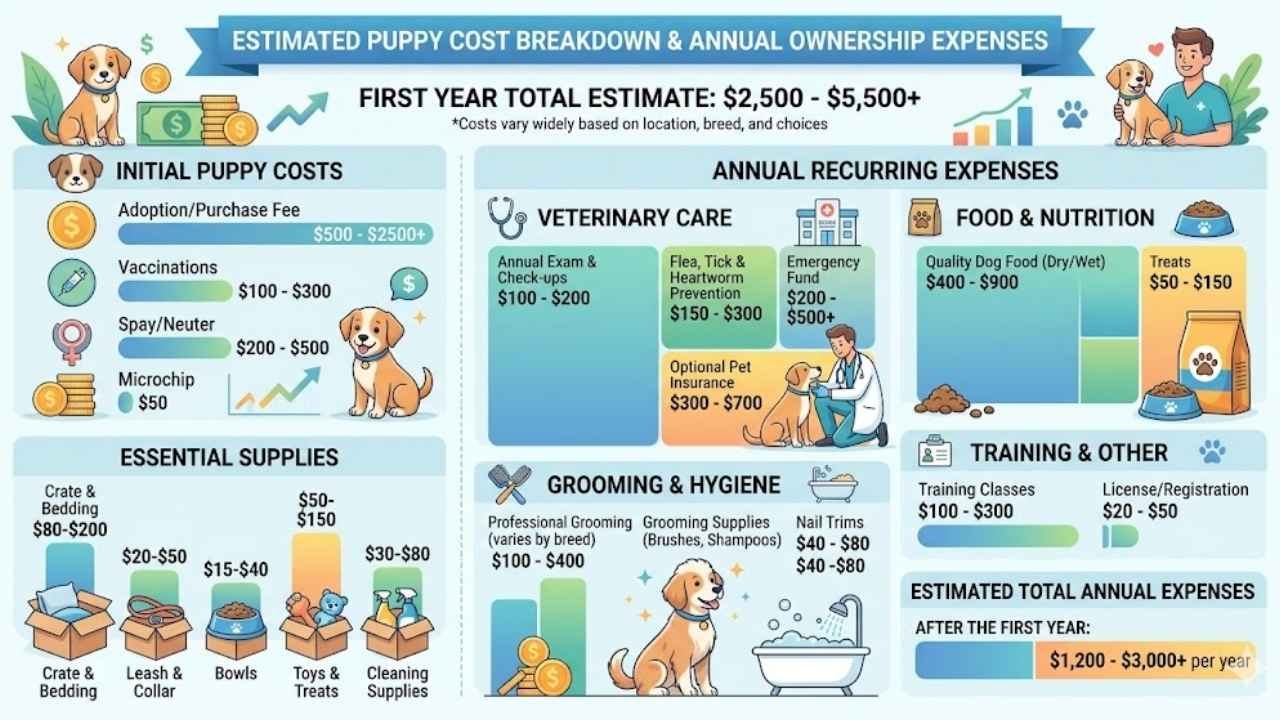
One area many first-time owners underestimate is the true cost of dog ownership.
The purchase price is only the beginning.
Initial Puppy Purchase or Adoption Costs
Initial costs may include:
- Adoption fees
- Breeder costs
- Crate
- Bed
- Food bowls
- Leash and collar
- Initial veterinary visits
- Vaccinations
These expenses can add up quickly during the first few months.
Monthly Food Expenses
Golden Retrievers are relatively large dogs with healthy appetites.
Monthly food costs vary based on:
- Dog size
- Activity level
- Food quality
- Special dietary needs
Choosing quality nutrition can support long-term health and reduce future medical issues, which is why selecting the best dog food for Golden Retrievers is so important.
Veterinary Care and Preventive Health Costs
Responsible ownership includes routine veterinary care such as
- Annual exams
- Vaccinations
- Parasite prevention
- Dental care
- Health screenings
Preventive care is usually less expensive than treating major health problems later.
Grooming, Toys, and Essential Supplies
Ongoing expenses often include:
- Grooming tools
- Replacement toys
- Training treats
- Bedding
- Leashes and harnesses
These recurring costs are easy to overlook when budgeting.
Typical Annual Ownership Costs
| Expense Category | Estimated Annual Cost |
|---|---|
| Food | Moderate |
| Veterinary Care | Moderate |
| Grooming Supplies | Low to Moderate |
| Toys & Enrichment | Low to Moderate |
| Preventive Care | Moderate |
| Training | Varies |
While costs vary by location, most owners should plan for a long-term financial commitment rather than focusing solely on the initial purchase price.
Common Health Issues First-Time Owners Should Understand
Golden Retrievers are generally healthy dogs, but like all breeds, they have certain health conditions that owners should be aware of.
Understanding these risks doesn’t mean your dog will develop them. Learning about common Golden Retriever health issues can help owners recognize warning signs early. Instead, it helps you make informed decisions about preventive care, nutrition, exercise, and breeder selection.
Hip Dysplasia
Hip dysplasia is one of the most commonly discussed orthopedic conditions in larger dog breeds.
It occurs when the hip joint doesn’t develop properly, which can lead to discomfort, mobility issues, and arthritis over time.
Signs may include:
- Difficulty standing up
- Reduced activity
- Stiffness after rest
- Reluctance to jump or climb stairs
Maintaining a healthy weight and avoiding excessive stress on developing joints can help support long-term joint health, along with veterinarian-approved joint-support supplements when appropriate.
Elbow Dysplasia
Elbow dysplasia affects the elbow joint and can cause pain and lameness.
This condition may appear during puppyhood or develop gradually as a dog ages.
Regular veterinary checkups can help identify problems early and improve treatment outcomes.
Cancer Risks in Golden Retrievers
One unfortunate reality of the breed is that Golden Retrievers have higher rates of certain cancers compared to many other dogs.
While this sounds alarming, many Goldens still enjoy long, happy lives.
Routine wellness exams, healthy nutrition, and prompt attention to unusual symptoms can help support early detection.
Ear Infections and Skin Conditions
Because Golden Retrievers have floppy ears and love water, they can be prone to ear infections.
Common warning signs include:
- Scratching at the ears
- Head shaking
- Odor from the ears
- Redness or irritation
Regular ear inspections and proper drying after swimming can help reduce the risk.
Preventive Care and Health Screenings
Preventive care is one of the most important investments a dog owner can make.
A good health routine typically includes:
- Annual veterinary exams
- Vaccinations
- Parasite prevention
- Dental care
- Weight management
- Age-appropriate screenings
The goal isn’t just to treat illness—it’s to help your dog stay healthy throughout life and prepare for potential health problems by age as your dog gets older.
Who Should Get a Golden Retriever?
Golden Retrievers can fit many lifestyles, but they are especially well-suited for certain types of owners.
Active Individuals and Outdoor Enthusiasts
If you enjoy:
- Walking
- Hiking
- Running
- Camping
- Spending time outdoors
A Golden Retriever will likely appreciate joining you.
Their athletic nature makes them excellent companions for active people.
Families Looking for a Friendly Companion
Many families choose Golden Retrievers because they combine affection, trainability, and social behavior.
They often enjoy participating in:
- Family outings
- Backyard play
- Weekend adventures
- Daily household routines
Owners Willing to Invest Time in Training
Golden Retrievers thrive when owners actively engage in training and enrichment.
People who enjoy teaching, interacting, and building a strong bond with their dog often find this breed particularly rewarding.
People Seeking a Social and Affectionate Dog
Some breeds are more independent.
Golden Retrievers generally prefer companionship.
If you want a dog that enjoys being involved in family life and spending time with people, this breed checks many boxes.
Who Might Want to Consider a Different Breed?
Being honest about your lifestyle is one of the most important steps in choosing a dog.
People With Very Busy Schedules
Golden Retrievers do best when they receive regular interaction and exercise.
If you’re routinely away from home for 10–12 hours a day, meeting their needs can become challenging.
Those Looking for a Low-Maintenance Dog
This breed requires:
- Regular grooming
- Daily exercise
- Ongoing training
- Consistent companionship
People seeking a low-maintenance pet may find these responsibilities overwhelming.
Individuals Sensitive to Heavy Shedding
Golden Retrievers shed year-round.
If dog hair is a major concern, another breed may be a better fit.
Households Unable to Meet Daily Exercise Needs
A bored Golden Retriever often finds ways to entertain itself, and owners don’t always appreciate those choices.
Without sufficient activity, unwanted behaviors may develop.
Golden Retrievers vs. Other Beginner-Friendly Dog Breeds
Golden Retrievers aren’t the only excellent choice for first-time owners.
Comparing breeds can help you identify the best match for your lifestyle.
Golden Retriever vs Labrador Retriever
Both breeds are highly trainable and family-friendly.
Golden Retrievers often have:
- Longer coats
- Higher grooming needs
- Slightly calmer personalities
Labradors typically:
- Shed heavily but require less coat maintenance
- Have very high energy levels
- Enjoy active lifestyles
For many beginners, both breeds are excellent options.
Golden Retriever vs Poodle
Poodles are among the most intelligent dog breeds in the world.
Compared to Golden Retrievers:
| Trait | Golden Retriever | Poodle |
|---|---|---|
| Trainability | Excellent | Excellent |
| Grooming | Moderate | High |
| Shedding | High | Low |
| Family Friendly | Excellent | Excellent |
| Beginner-Friendly | Excellent | Very Good |
Poodles may be appealing to owners concerned about shedding.
Golden Retriever vs Cavalier King Charles Spaniel
The Cavalier King Charles Spaniel offers a different experience.
Compared to a golden retriever, Cavaliers are
- Smaller
- Easier to manage physically
- Less demanding in terms of exercise
- Better suited to some apartment lifestyles
However, they don’t provide the same athletic versatility as a Golden Retriever.
Comparison Table for First-Time Owners
| Breed | Trainability | Exercise Needs | Grooming Needs | Beginner-Friendly |
|---|---|---|---|---|
| Golden Retriever | High | Moderate-High | Moderate | Excellent |
| Labrador Retriever | High | High | Low-Moderate | Excellent |
| Poodle | High | Moderate | High | Very Good |
| Cavalier King Charles Spaniel | Moderate | Moderate | Moderate | Very Good |
No breed is universally “best.” The right choice depends on your lifestyle, expectations, and ability to meet the dog’s needs.
Common Mistakes First-Time Golden Retriever Owners Make
Even great breeds can become challenging if common mistakes go unaddressed.
Underestimating Exercise Needs
Many owners focus on the breed’s friendly personality and overlook its athletic side.
A lack of exercise is one of the most common causes of behavioral issues.
Delaying Socialization
The early months of a puppy’s life are critical.
Positive exposure to people, environments, and experiences helps create a confident adult dog.
Inconsistent Training
Dogs learn best when rules remain consistent.
Allowing a behavior one day and correcting it the next can slow training progress.
Ignoring Mental Stimulation
Physical activity matters, but so does mental engagement.
Training sessions, puzzle toys, and enrichment games help keep intelligent dogs satisfied.
Overfeeding and Weight Gain Risks
Golden Retrievers love food.
Without portion control and regular exercise, excess weight can contribute to joint problems and other health concerns.
Frequently Asked Questions About Golden Retrievers for First-Time Owners
Are Golden Retrievers Good for First-Time Dog Owners?
Yes. Golden Retrievers are widely considered one of the best breeds for first-time owners because they are friendly, intelligent, trainable, and eager to please. However, they still require regular exercise, grooming, and training.
Are Golden Retrievers High Maintenance?
They are moderately high-maintenance compared to some breeds.
Their exercise needs, grooming requirements, and desire for companionship require a meaningful time commitment.
Do Golden Retrievers Bark a Lot?
Most Golden Retrievers are not excessive barkers.
They may bark to alert their owners, express excitement, or seek attention, but they are generally not known as highly vocal dogs.
Can Golden Retrievers Be Left Alone During the Day?
They can tolerate some time alone, but they generally prefer companionship.
Long periods of isolation may increase the risk of boredom and separation-related behaviors.
How Much Exercise Does a Golden Retriever Need?
Most healthy adults need roughly 1–2 hours of daily physical activity along with regular mental stimulation.
Are Male or Female Golden Retrievers Better for Beginners?
Both can be excellent pets.
Personality, training, socialization, and individual temperament usually have a greater impact than gender alone.
Is a Golden Retriever Puppy Difficult to Raise?
Like all puppies, Golden Retrievers require patience and consistency. Learning how to properly care for a Golden Retriever puppy can make the transition much smoother for new owners.
The puppy stage can be demanding, but their intelligence and trainability often make the process easier than with many other breeds.
What Is the Biggest Challenge of Owning a Golden Retriever?
For most owners, the biggest challenges are meeting daily exercise needs, managing shedding, and providing enough attention and interaction.
Final Verdict: Is a Golden Retriever the Right First Dog for You?
If you’re wondering whether Golden Retrievers are good for first-time owners, the answer is usually yes.
They combine many qualities that beginners appreciate:
- Friendly temperament
- High trainability
- Strong family compatibility
- Intelligence
- Loyalty
- Adaptability
However, owning one is still a commitment.
Reasons a Golden Retriever Might Be Perfect for You
A Golden Retriever may be an excellent choice if you:
- Want an affectionate companion
- Enjoy spending time outdoors
- Are you willing to invest in training
- Have time for daily interaction
- Don’t mind regular grooming and shedding
Signs Another Breed May Be a Better Fit
You may want to explore other options if you:
- Prefer a low-maintenance dog
- Have very limited free time
- Dislike shedding
- Cannot provide daily exercise
Key Takeaways for First-Time Owners
Golden Retrievers are beginner-friendly, but they are not effortless pets.
Success comes from understanding their needs and consistently meeting them throughout their lives.
Questions to Ask Yourself Before Bringing One Home
Before making a decision, ask yourself:
- Can I provide daily exercise?
- Do I have time for training and socialization?
- Am I comfortable with regular grooming and shedding?
- Can I afford long-term veterinary and care expenses?
- Am I ready for a commitment that may last 10–12 years or more?
If you answered yes to most of those questions, a Golden Retriever could be one of the most rewarding first dogs you’ll ever own.
With proper care, training, and attention, these affectionate companions often become cherished members of the family for years to come.