A Golden Retriever’s long, luxurious coat is one of the most beautiful features of this friendly breed. Many owners notice soft feathering and wonder how it develops and how to care for it properly. Understanding the golden retriever coat type helps you manage grooming, shedding, and overall health with ease. These dogs have a unique golden retriever double coat that protects them in all seasons.
Their golden retriever coat structure includes both outer hair and a dense layer beneath, which affects texture and length. With the right golden retriever grooming routine and proper golden retriever coat maintenance, you can keep your dog’s coat clean, shiny, and comfortable every day.
What Is a Golden Retriever Long Hair?

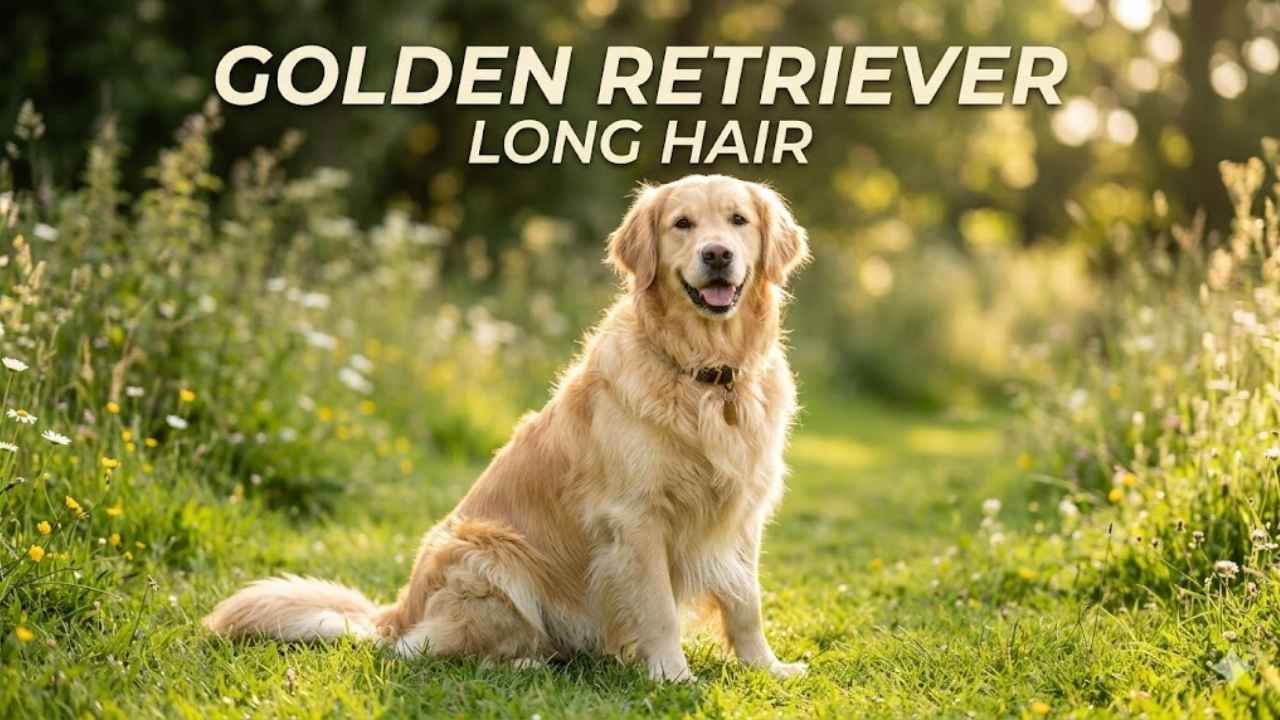
A golden retriever’s long hair means a dog with more visible feathering and length. This comes from the golden retriever coat type and the natural golden retriever coat structure. Some dogs, like the red-haired golden retriever, look fluffier because of their golden retriever coat length variations. Many owners ask if golden retrievers have long hair naturally, and the answer is yes, but the levels differ.
Long hair usually appears on the legs, chest, and tail, as seen in light golden retrievers. This is called golden retriever feathering hair. The coat protects the dog and supports golden retriever skin and coat health. Many people wonder why my golden retriever has long hair, and it mostly comes from the golden retriever’s coat genetics.
What “Long Hair” Means in Golden Retrievers
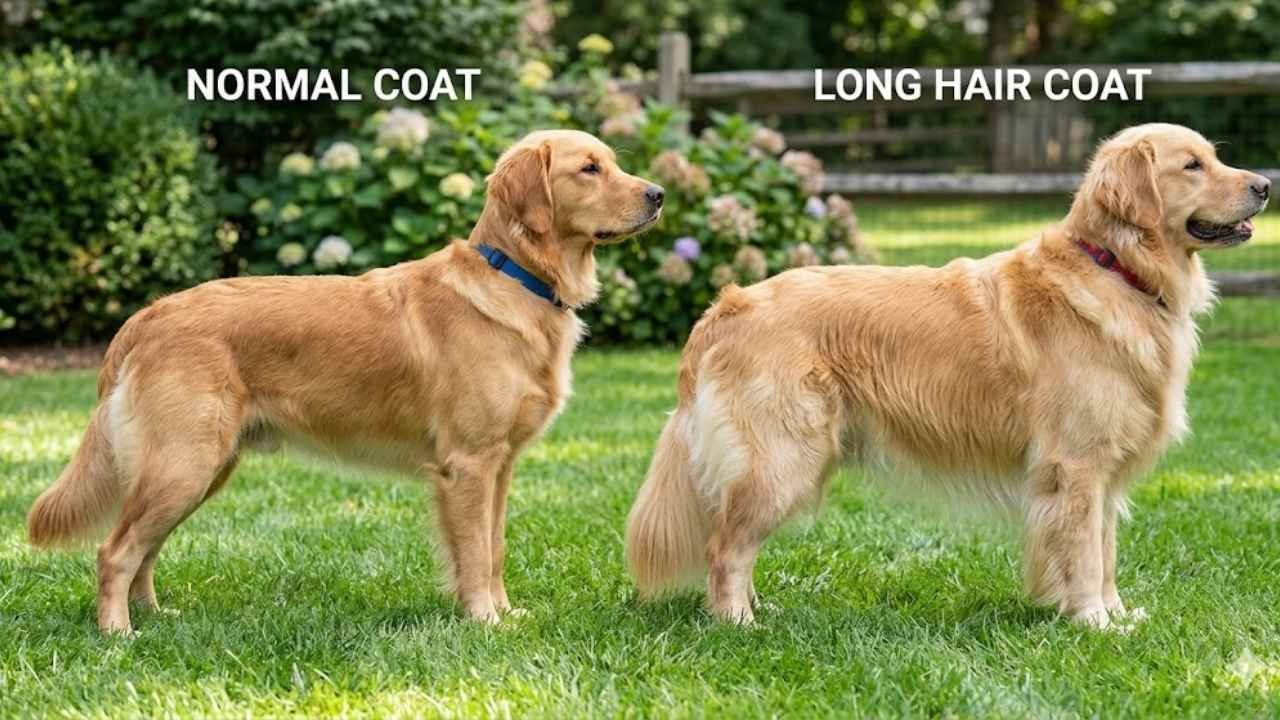
Long hair means more feathering and softer layers. It is part of the golden retriever’s double coat.
Difference Between Normal and Long Coat
Normal coats look flat. Long coats show volume due to the golden retriever’s undercoat and topcoat.
Why This Topic Matters for Owners
It helps you understand grooming and golden retriever coat maintenance better.
Do All Golden Retrievers Have Long Hair?

Not every dog shows the same coat. Some have a golden retriever with a thick vs. thin coat. This depends on field-bred vs. show golden retriever coat lines. Many owners ask, “Can golden retrievers have extra-long hair?” and yes, some do.
Genetics plays the biggest role. If parents have thick coats, puppies may too. People often ask why my golden retriever is not fluffy, and this is a normal variation. It does not mean poor golden retriever coat health.
Genetics Behind Coat Length
Genes control golden retriever coat development and thickness.
American vs English vs Canadian Coat Differences
Each line shows different golden retriever colors and coat type styles.
Common Myths About Golden Retriever Hair
Not all fluffy dogs are healthier. So, does long hair mean a healthier golden retriever? It is not always true.
When Do Golden Retrievers Develop Long Hair?
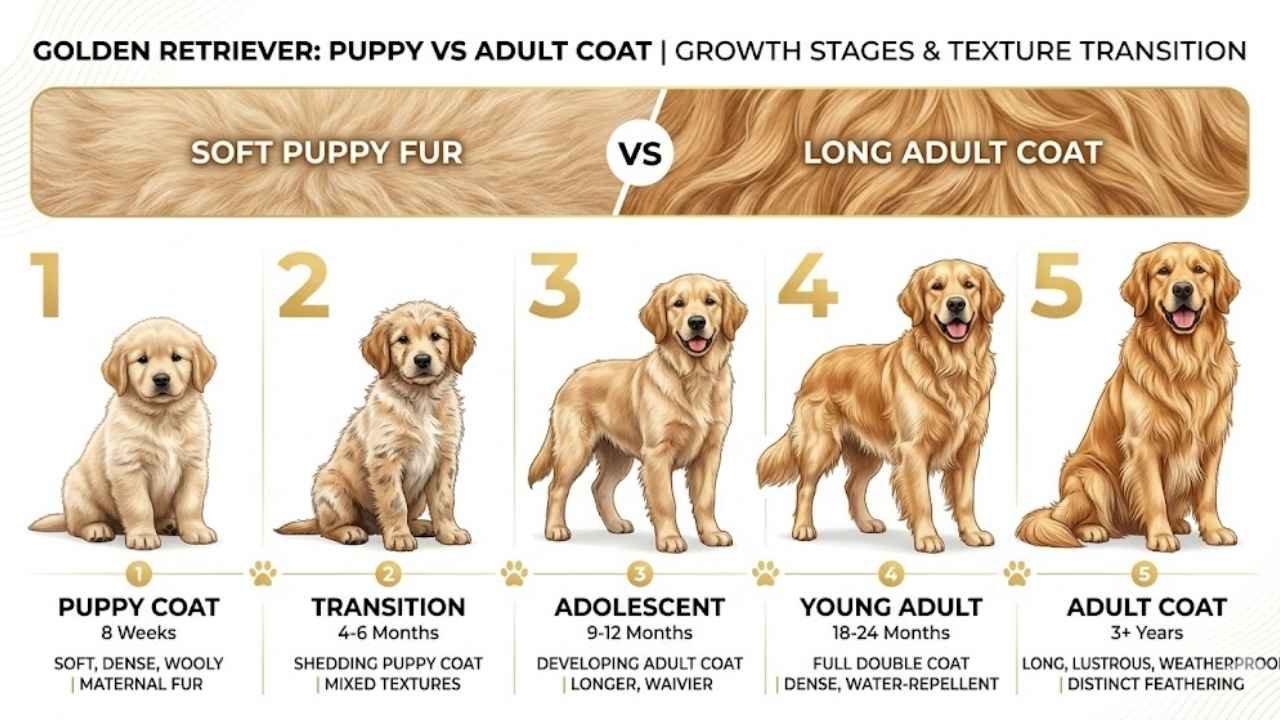
Coat changes as puppies grow. This stage is called the golden retriever coat growth stages. Many ask when golden retrievers get long hair, and it usually starts after a few months.
The golden retriever coat timeline shows big changes between 3 and 12 months. Owners also ask at what age the golden retriever coat fully grows, and the full coat comes around at 18 months.
Puppy Coat vs Adult Coat
The golden retriever puppy coat vs. the adult coat is very different. Puppies have softer fur.
Coat Growth Timeline (3 to 12 Months)
Hair thickens slowly during this stage.
Signs Your Golden Will Have Long Hair
Look for early feathering and a dense coat.
Types of Golden Retriever Coats Explained
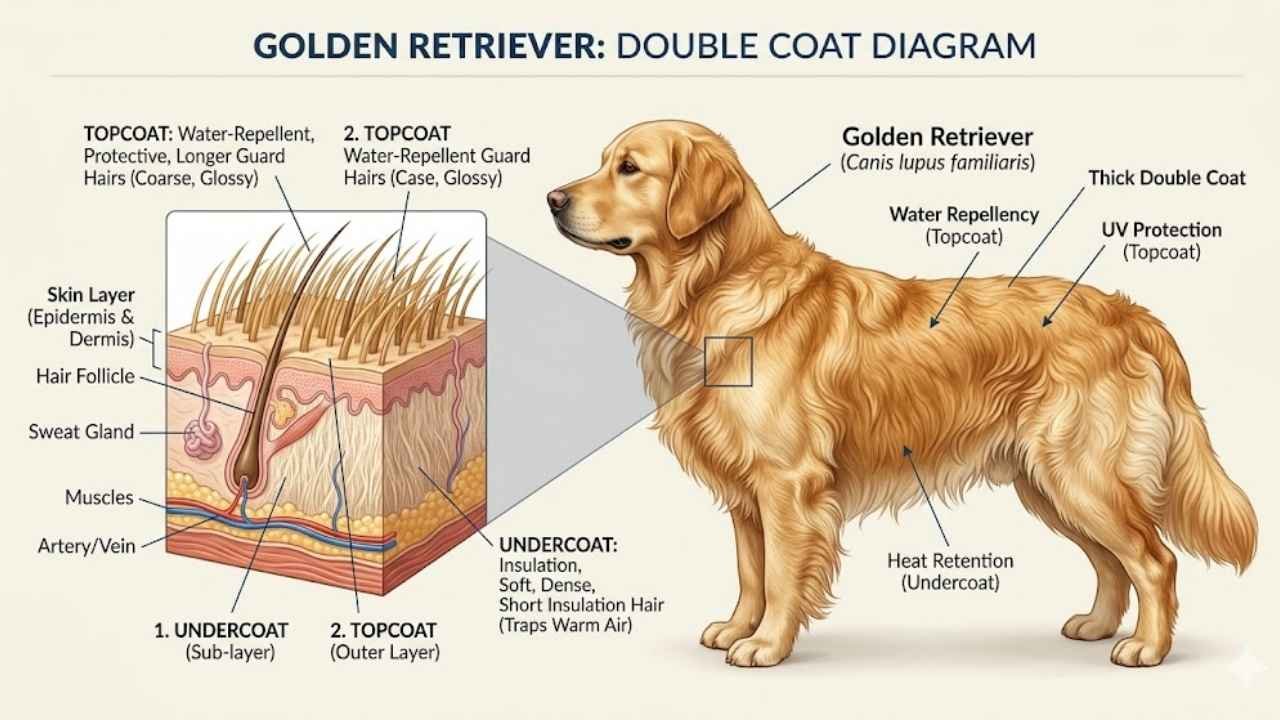
Understanding coat types helps with grooming. The golden retriever’s double coat includes layers that protect and regulate heat. This is key to golden retriever coat health. Learn more about the complete golden retriever coat guide for detailed information on breed-specific coat types.
The golden retriever’s undercoat and topcoat work together. One keeps warm. The other protects from water. This explains how long golden retriever hair grows differently in each dog.
Understanding the Double Coat
It protects in both summer and winter.
Undercoat vs Topcoat Differences
Each layer has a different role, similar to what you’d see in a cream-colored retriever.
Thick vs Feathered Coat Types
Some dogs have dense coats. Others have flowing hair.
Why Some Golden Retrievers Have Extra Long Hair
Many factors affect coat length, with genetics playing the biggest role.
However, diet and care also matter. A balanced diet supports coat health. These dog nutrition and balanced diet basics can help improve coat shine and strength.
Role of Genetics
Genes control coat thickness, which varies among the kinds of golden retrievers.
Diet and Nutrition Impact
Food supports a golden retriever’s soft and shiny coat.
Grooming Habits and Coat Health
Regular care improves coat quality.
Environmental Factors
Weather affects coat growth.
How to Groom a Golden Retriever with Long Hair

Grooming keeps your dog healthy and comfortable. Many owners ask how to groom a long-haired golden retriever, and it starts with a routine.
A proper grooming routine includes brushing, bathing, and checking for tangles. You can explore general care methods in the dog grooming basics and coat care.
Step-by-Step Grooming Routine
Start with brushing. Then check for tangles.
Brushing Techniques for Long Hair
Learn how to brush a golden retriever’s long hair properly.
Bathing and Drying Tips
Follow the proper way to bathe a golden retriever correctly.
Trimming Sensitive Areas Safely
Be careful near paws and ears.
Best Brushes for Golden Retriever Long Hair

Choosing tools matters. Brushes support a golden retriever’s coat care routine and reduce shedding.
Different tools help with different needs. They improve golden retriever hair matting prevention and comfort.
Slicker Brush for Daily Use
Good for removing loose hair.
Undercoat Rake for Shedding Season
Helps during golden retriever seasonal shedding.
De-shedding Tools Explained
Useful for heavy shedding.
How to Choose the Right Brush
Pick based on coat thickness.
How Often Should You Groom Long-Haired Golden Retrievers?
Routine matters for coat health. Many ask how often you should brush a golden retriever, and regular brushing is key.
Grooming also depends on the golden retriever’s shedding cycle. During heavy shedding, grooming increases.
Daily Grooming Routine
Light brushing keeps the coat clean.
Weekly Maintenance Schedule
Deep grooming once a week works well.
Seasonal Shedding Care
Increase grooming during shedding.
Should You Cut or Trim a Golden Retriever’s Long Hair?
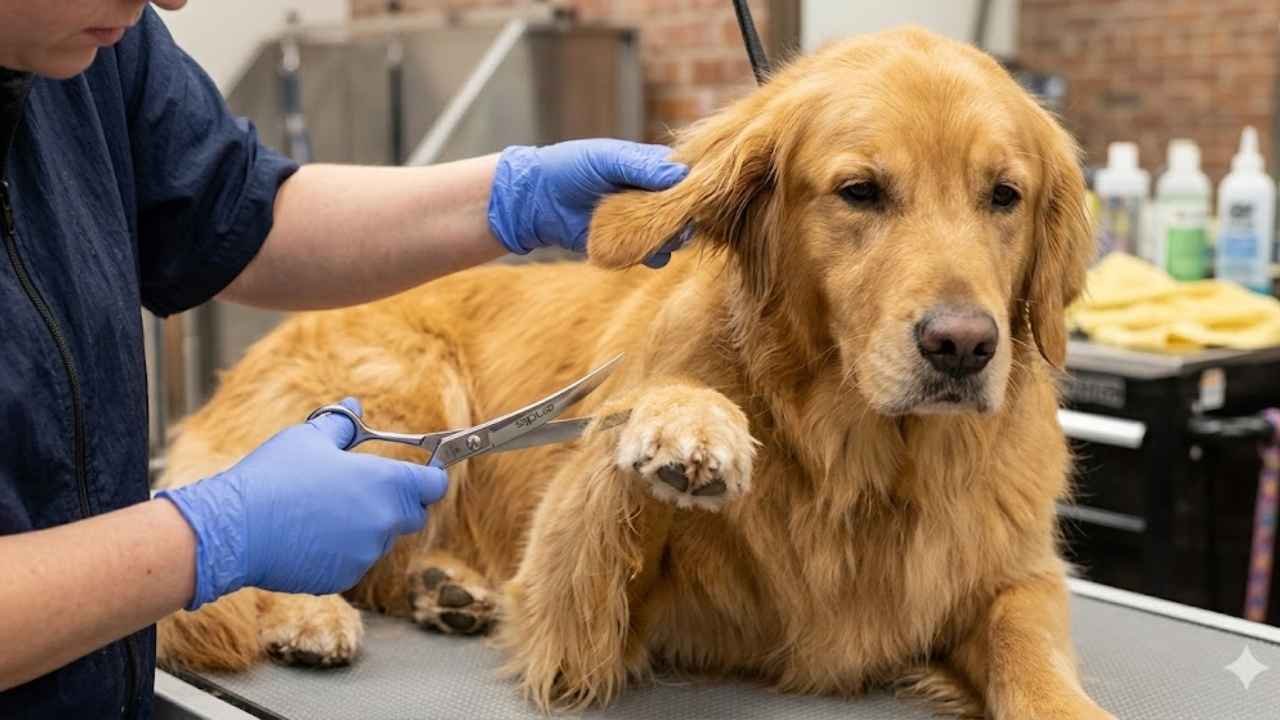
Many ask, “Can you cut golden retriever hair?” Trimming is fine, but full cuts are not needed.
You may also wonder whether you should trim a golden retriever’s hair. Light trimming improves appearance without harming the coat.
When Trimming Is Necessary
Trim when hair becomes messy.
Areas You Can Safely Trim
Feet, ears, and tail are safe.
Common Grooming Mistakes to Avoid
Avoid cutting too much hair.
Can You Shave a Golden Retriever’s Long Hair? (Important Warning)
Many owners ask, “Should you shave a golden retriever?” but this is not safe.
Experts also say it’s bad to shave a golden retriever. Yes, shaving damages the coat.
Why Shaving Is Not Recommended
It removes natural protection.
Risks of Damaging the Double Coat
It harms the golden retriever coat structure.
Better Alternatives to Shaving
Use brushing instead.
How to Keep Your Golden Retriever’s Long Hair Soft and Shiny
Healthy coats need proper care. Many ask how to keep golden retriever hair soft and shiny, and diet plays a big role.
Using the right products helps. Owners also ask what shampoo is best for a golden retriever coat, and gentle formulas work best.
Best Diet for Coat Health
Nutrition supports the golden retriever coat.
Importance of Omega-3 and Protein
These improve coat shine.
Choosing the Right Shampoo and Conditioner
Use mild products.
Home Remedies for Coat Care
Simple oils can help.
Common Problems with Long Hair Golden Retrievers
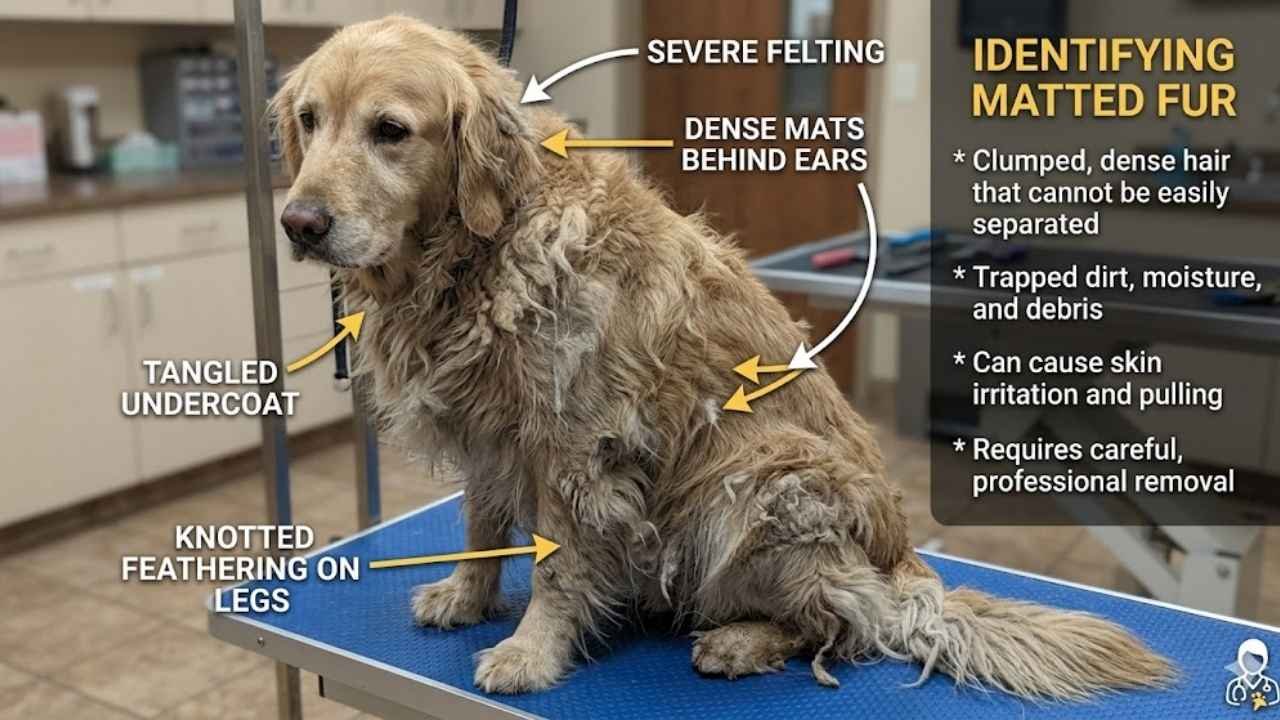
Long hair brings challenges. Common golden retriever coat problems include tangles and shedding.
Owners often ask how to prevent matting in golden retriever hair. Regular brushing solves most issues.
Matting and Tangles
Brush often to avoid knots.
Excessive Shedding
Manage using proper tools.
Skin Issues and Hot Spots
Check skin regularly.
Overheating in Summer
Follow golden retriever summer grooming tips.
Long Hair Golden Retriever Grooming Styles (Popular Cuts)
Different styles help manage the coat. Some owners prefer natural looks.
Others like trimmed styles for easy care. Grooming also improves golden retriever tail grooming and golden retriever ear hair trimming.
Natural Feathered Look
Keeps natural beauty.
Summer Trim Style
Reduces heat.
Maintenance Cut
Easy to manage daily.
Show-Style Grooming
Used in competitions.
How Long Hair Affects Shedding in Golden Retrievers
Long hair makes shedding more noticeable. Many owners ask how to manage it, and regular grooming is the key.
Shedding is natural and often seasonal. Learn more in this guide on why dogs shed and the coat cycle explained.
Seasonal vs Year-Round Shedding
Shedding changes with seasons.
Managing Shedding Effectively
Brush regularly.
Tools That Reduce Hair Around the House
Use de-shedding tools.
Quick Comparison Table: Coat Care Basics
| Factor | Recommendation |
|---|---|
| Grooming Frequency | Weekly |
| Brushing | Every few days |
| Bathing | Monthly |
| Trimming | Light only |
| Shaving | Not recommended |
This guide gives you everything you need to know about golden retrievers’ long hair. Follow these tips, and your dog will stay healthy, clean, and happy.
Frequently Asked Questions About Golden Retriever Long Hair
[sp_easyaccordion id=”1003″]