
These reactions usually develop over time and are closely linked to Golden Retriever dietary sensitivities, where the body struggles to tolerate certain ingredients. What starts as mild itching or stomach upset can slowly turn into persistent skin or digestive trouble. Understanding the causes, early warning signs, and long-term care options for dog food allergies helps you protect your Golden Retriever from unnecessary discomfort and improve their quality of life through informed dietary choices.
What Are Food Allergies in Golden Retrievers?

Food allergies in Golden Retrievers occur when the immune system launches an incorrect immune response to normal food ingredients. Instead of recognizing food as fuel, the body treats it as danger. That mistake triggers an allergic reaction that recurs whenever the trigger appears.
This reaction does not fade on its own. Each exposure strengthens the immune memory. That is why untreated allergic reactions in Golden Retrievers often become more severe with time and require structured veterinary care.
Why Golden Retrievers Are Prone to Food Allergies
Golden Retrievers carry a strong genetic predisposition toward immune-related conditions. Their immune defenses are active and sometimes too alert. This makes them more likely to develop skin allergies in Golden Retrievers and chronic digestive discomfort.
Environmental exposure increases the risk. Repeated contact with allergens, processed foods, and fillers pushes the immune system into constant defense mode. Over time, inflammation becomes the new normal.
Food Allergy vs Food Intolerance in Golden Retrievers
Understanding food intolerance vs food allergy in dogs helps avoid confusion. A food allergy involves the immune system and affects multiple organs. A food intolerance affects digestion only.
Dogs with intolerance may show loose stools or gas. Dogs with allergies often develop itching, redness, and ear infections. This difference matters when choosing the right treatment path.
Common Food Allergens for Golden Retrievers
The most common food allergens for Golden Retrievers include beef, chicken, dairy, wheat, soy, and corn, which align with findings on foods Golden Retrievers are allergic to reported in breed-specific research. These ingredients appear frequently in everyday diets, which increases the risk.
Hidden dangers matter too. Artificial additives and preservatives irritate the immune system and worsen reactions. Over time, repeated exposure teaches the body to stay inflamed.
Signs and Symptoms of Golden Retriever Food Allergies
Golden Retriever allergy symptoms often start on the skin. Many dogs show Itchy skin / Scratching / Biting / Licking that never fully stops. Skin irritation / Inflammation / Redness spreads across paws, ears, and the belly.
Digestive signs follow. Vomiting and diarrhea, excessive gas, and appetite changes signal gastrointestinal issues in dogs. Left untreated, these problems lead to secondary infections / hot spots and declining coat health.
When Do Food Allergies Usually Start in Golden Retrievers
Food allergies can appear at any age. Some puppies react early. Others develop symptoms after years on the same food. Adult-onset allergies often confuse owners.
A sensitive stomach in Golden Retrievers often acts as an early warning sign. Subtle paw chewing or recurring ear redness should never be ignored.
How Food Allergies Are Diagnosed in Golden Retrievers
Diagnosis begins with careful observation. Veterinarians review symptoms and recommend Diagnosis / Diagnostic tests to rule out parasites or infections. These may include intradermal skin tests, blood testing, and cytology.
The gold standard remains the elimination diet for dogs. This controlled plan removes suspected triggers and tracks improvement through a strict elimination diet process.
Role of Diet in Managing Golden Retriever Food Allergies
Diet sits at the center of managing food allergies in dogs. Removing triggers allows the immune system to settle. Inflammation decreases. Skin begins to heal.
A stable diet supports digestive health, improves nutrient absorption, and restores energy. Consistency prevents accidental exposure that could restart symptoms.
Limited Ingredient Diets Explained for Golden Retrievers

A limited ingredient diet for dogs reduces immune confusion. Each ingredient has a purpose. Nothing extra sneaks in to trigger reactions.
Veterinarians often recommend this approach as a veterinary recommendation because it simplifies diagnosis and supports long-term stability. Many limited-ingredient diets are also categorized as hypoallergenic dog food, which focuses on minimizing exposure to ingredients known to trigger immune reactions.
Novel Protein Diets for Golden Retrievers With Food Allergies
A novel protein dog food uses a protein source your dog has never eaten before. Since the immune system has no memory of it, reactions drop dramatically.
This strategy works well during elimination trials. Elimination diet / Novel protein plans often bring visible relief within weeks when followed carefully.
Importance of Omega Fatty Acids for Allergic Golden Retrievers
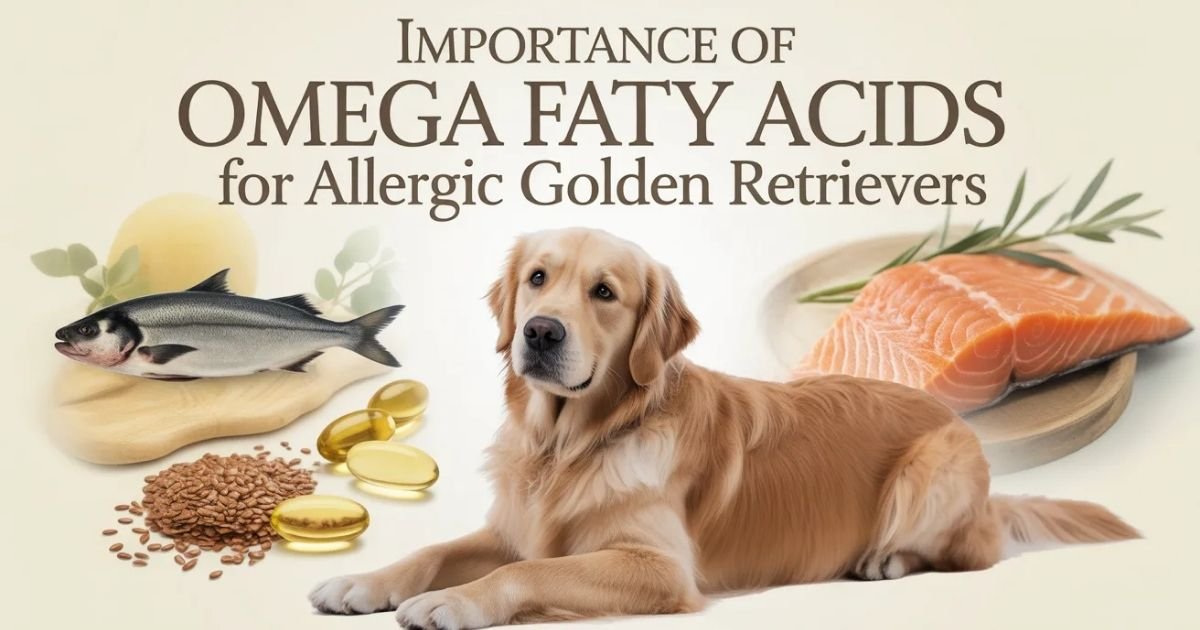
Omega-3 fatty acids play a powerful role in reducing inflammation. They strengthen skin barrier health and improve moisture retention.
Regular intake improves coat shine and reduces itching. This nutritional support speeds recovery and improves overall comfort.
Ingredients to Avoid in a Golden Retriever With Food Allergies
Avoiding triggers prevents relapse. Ingredients like beef, chicken, dairy, wheat, soy, and corn frequently cause immune reactions.
Reading labels matters. Learning how to identify, avoid, and monitor ingredients protects your dog from accidental exposure.
How to Safely Transition Your Golden Retriever to a New Diet

Diet changes should never be rushed. A gradual diet transition protects digestion and reduces setbacks. Sudden changes shock the gut.
Watch stool quality, itching, and energy during the transition. Any setback means slowing down or consulting your veterinarian.
Long-Term Management and Care for Golden Retriever Food Allergies
Successful care depends on routine. Long-term allergy management includes diet control, grooming, and environmental hygiene. Regular bathing removes allergens.
Owners should monitor, bathe, vacuum, and consult their veterinarian consistently. This routine prevents flare-ups and supports lasting comfort.
Frequently Asked Questions About Golden Retriever Food Allergies
How can I tell if my dog is allergic to its food?
If your dog has constant itching, ear infections, or stomach problems that don’t improve, food allergies may be the cause.
What foods should Golden Retrievers not eat?
Golden Retrievers often react to beef, chicken, dairy, wheat, soy, and foods with artificial additives.
Which food is best for a Golden Retriever?
A balanced diet with simple ingredients, high-quality protein, and healthy fats works best for most Golden Retrievers.
What are the top 3 food allergies in dogs?
The most common food allergies in dogs are beef, chicken, and dairy products.
What is the best thing to feed a dog with allergies?
Dogs with allergies do best on limited-ingredient or novel-protein diets recommended by a veterinarian.
This website is independently created to provide educational and informational content about Golden Retrievers. To learn more about our mission and website policies, please visit our About Us, Privacy Policy, Terms & Conditions, and Contact Us pages.