

Golden Retrievers are among the most loved dogs in the United States. Their friendly nature and intelligence make them a perfect family companion. However, many people don’t realize there are different kinds of golden retrievers, each with unique traits. From regional variations to coat shades, these dogs come in several types of golden retrievers that suit different lifestyles.
Some are energetic working dogs, while others are calm and easygoing pets. Understanding these different types of golden retrievers helps you choose the right one for your home. In this guide, you’ll explore all major golden retriever types, including official and unofficial ones, along with their personalities, sizes, and care needs in simple, easy-to-understand language.
What Are the Different Kinds of Golden Retrievers?
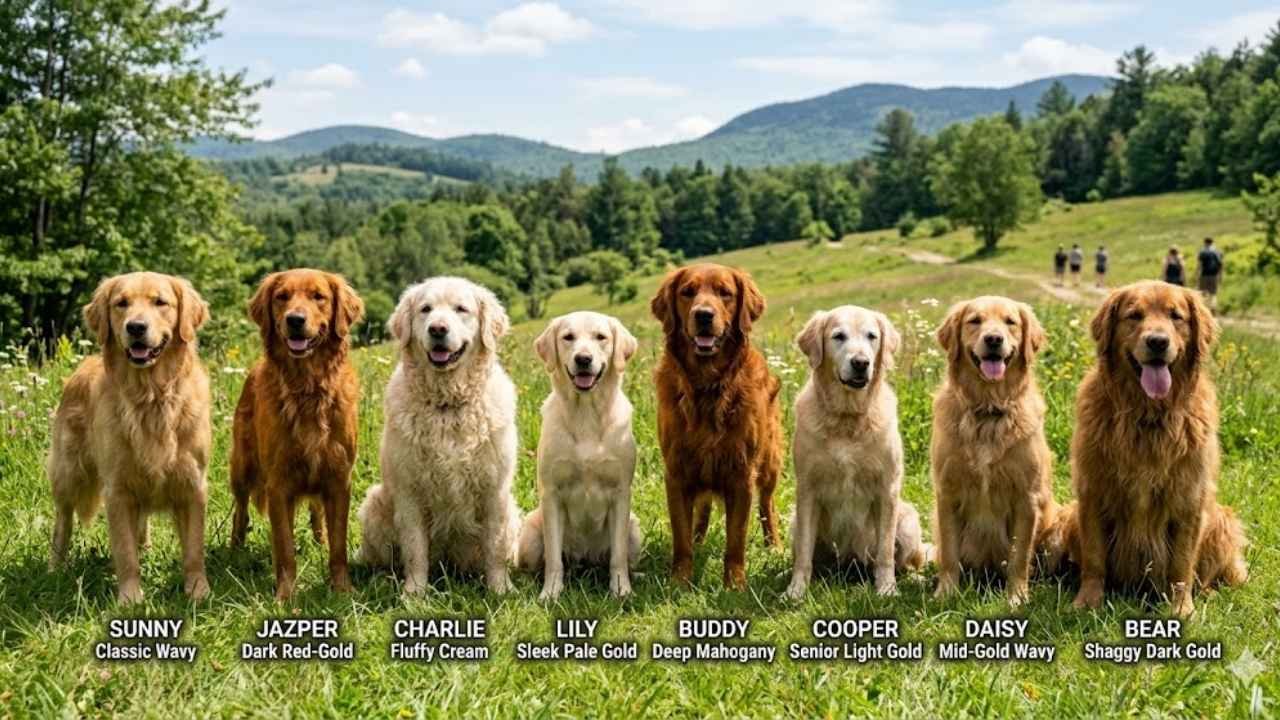
When people talk about the kinds of golden retrievers, they usually mean different looks and traits. However, they all belong to the same Golden Retriever breed. The differences come from region, color, and purpose. This is why you will see many golden retriever categories online.
In simple terms, there are official and unofficial golden retriever subtypes. The official ones follow breed standards set by clubs like the American Kennel Club. Others are just golden retriever varieties created through dog breeding trends.
How Many Types of Golden Retrievers Are There?
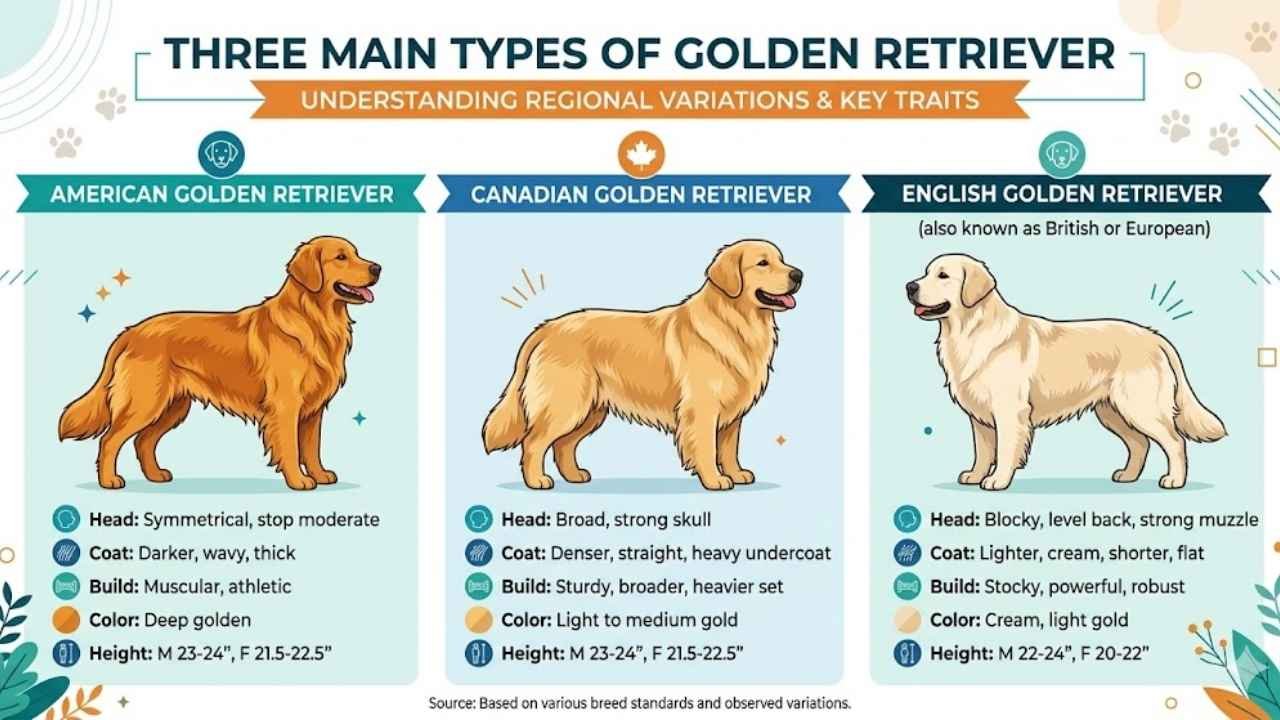
Many people ask how many different types of golden retrievers exist. The truth is simple. There are only three official golden retriever breed types. These are based on location and recognized by kennel clubs.
However, you may hear about 6 or even 8 golden retriever types. That is because people include color and purpose-based golden retriever variations. This creates confusion, but understanding this difference helps you choose better.
A Brief History of Golden Retrievers

The story of the golden retriever’s origin in Scotland begins in the 1800s, as explained in this detailed Golden Retriever history guide. A man named Lord Tweedmouth, also known as Dudley Marjoribanks, started the breed in Scotland (origin of the breed). He crossed a yellow retriever with a tweed water spaniel.
Later, breeds like the flat-coated retriever were added. This created a strong hunting dog with a soft mouth, which is further explained in this Golden Retriever breed overview. Over time, the golden retriever breed’s history spread worldwide. Today, it is one of the most loved hunting dogs and family pets.
The 3 Main Types of Golden Retrievers (Official Types)
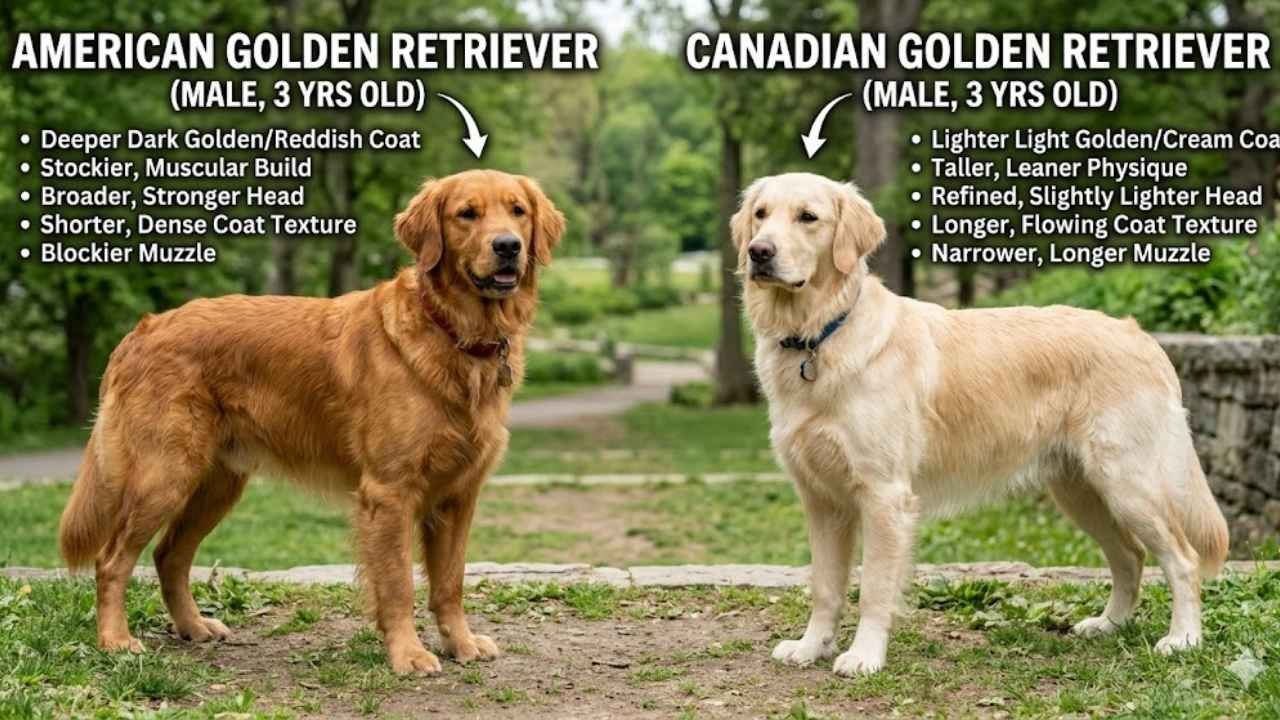
The three official kinds of golden retrievers are based on geography. These include American, Canadian, and British types. Each follows rules set by kennel clubs, like the American Kennel Club breed standards and the UK Kennel Club Golden Retriever guide.
Even though they share the same roots, their appearance and energy levels differ. This makes golden retriever comparisons very useful when choosing the best fit for your home.
American Golden Retriever
The American Golden Retriever is the most common in the USA. It has a rich golden coat and athletic build. These dogs have high golden retriever energy levels and love outdoor activities.
They are known for strong golden retriever personality traits like loyalty and intelligence. This type fits active families who enjoy hiking or playing.
Canadian Golden Retriever
The Canadian Golden Retriever looks leaner and taller. Its coat is thinner but still shiny. Many experts note small differences in Canadian vs. American golden retriever traits.
This type adapts well to different environments. It works well as a golden retriever working dog and a companion dog.
English/British Golden Retriever
The English Golden Retriever or British Golden Retriever has a lighter coat. It often appears cream-colored and stockier. This type is popular in calm households.
Many people believe they are among the calm golden retriever types. However, personality still depends on dog genetics and training.
American vs Canadian vs English Golden Retriever: Key Differences
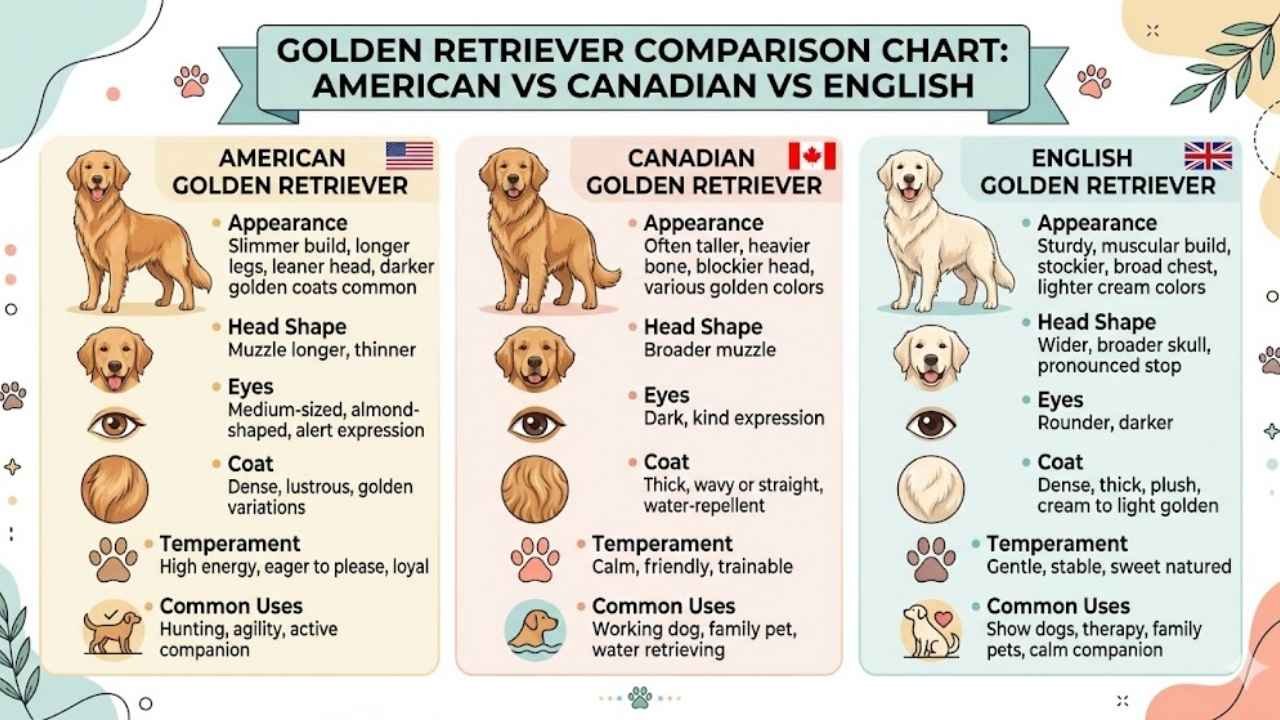
Understanding American vs. English golden retriever differences helps you decide faster. These differences include size, coat, and behavior.
| Type | Build | Coat | Energy |
|---|---|---|---|
| American | Athletic | Dark golden | High |
| Canadian | Lean | Thin coat | Medium |
| English | Stocky | Light cream | Calm |
This golden retriever breed differences table shows why each type suits different lifestyles.
Kinds of Golden Retrievers Based on Color
Color plays a big role in identifying golden retriever coat colors. Explore all shades in our detailed golden retriever colors guide on golden retriever colors.
These shades are recognized under golden retriever color variations by kennel clubs.
Although colors differ, behavior stays mostly the same. Still, some owners notice slight differences in golden retriever temperament based on coat shade.
Light Golden Retriever
The light golden retriever has a pale cream-colored coat. Learn more in our detailed guide on the light golden retriever. Many confuse it with the English cream golden retriever. Read the full breakdown in our cream-colored retriever guide. It looks elegant and soft.
This type often appears calmer. However, this is not always guaranteed. Training and dog behavior matter more.
Dark Golden Retriever
The dark golden retriever has a deep golden or copper tone. It is common in the USA and often linked with active lifestyles.
Some people believe darker coats relate to higher golden retriever energy levels. But again, personality depends on upbringing.
Red Golden Retriever
The red golden retriever stands out with a rich red coat. Discover more in our red-haired golden retriever article. It often comes from a field-bred golden retriever line.
This type shows strong drive and focus. The red golden retriever’s personality is energetic and task-oriented.
English Cream Golden Retriever
The English cream golden retriever is famous for its pale coat. It is not a separate breed but a variation of the English Golden Retriever.
Many people search for the English cream golden retriever price because of its demand. It is often seen as elegant and rare.
Kinds of Golden Retrievers Based on Purpose (Field vs Show)
Another way to classify kinds of golden retrievers is by purpose. This includes working dogs vs. show dogs.
Some are bred for work. Others are bred for appearance. This creates clear differences in energy and structure.
Field-Bred Golden Retrievers
A field-bred golden retriever is built for action. It works as a golden retriever hunting dog and excels in outdoor tasks.
These dogs need daily exercise. Without it, they may become restless. They are perfect for active owners.
Show Golden Retrievers
A show golden retriever is bred for dog shows and dog competitions. It has a thicker coat and a calm nature.
This type suits families who want a relaxed pet. It also follows strict breed standards.
Rare & Unofficial Types of Golden Retrievers

Some rare golden retriever types are not officially recognized. These include mixes and designer dogs.
These types fall under purebred vs. mixed breed or even hybrid dogs. They can still make great pets.
Mini Golden Retriever
The mini golden retriever is smaller in size. It is created by mixing with other breeds.
This makes it ideal for apartments. But its traits may vary due to mixed dog genetics.
Black Golden Retriever (Myth Explained)
The black golden retriever myth confuses many people. Pure Golden Retrievers are never black.
A black version usually comes from mixing with Labradors. So it is not a true Golden Retriever.
Do Different Types of Golden Retrievers Have Different Temperaments?
All golden retriever types share a friendly nature. They are known for kindness and loyalty. This makes them a top golden retriever family dog.
However, energy levels may differ. A high-energy golden retriever, like a field type, needs more activity. Proper dog training and dog socialization shape behavior more than type.
Which Kind of Golden Retriever Is Best for You?
Choosing the best type of golden retriever depends on your lifestyle. Active people may prefer field types. Calm households may prefer shows types.
If you are new, consider a golden retriever for first-time owners. Also, think about space, time, and budget before choosing.
Golden Retriever Size, Coat & Physical Differences
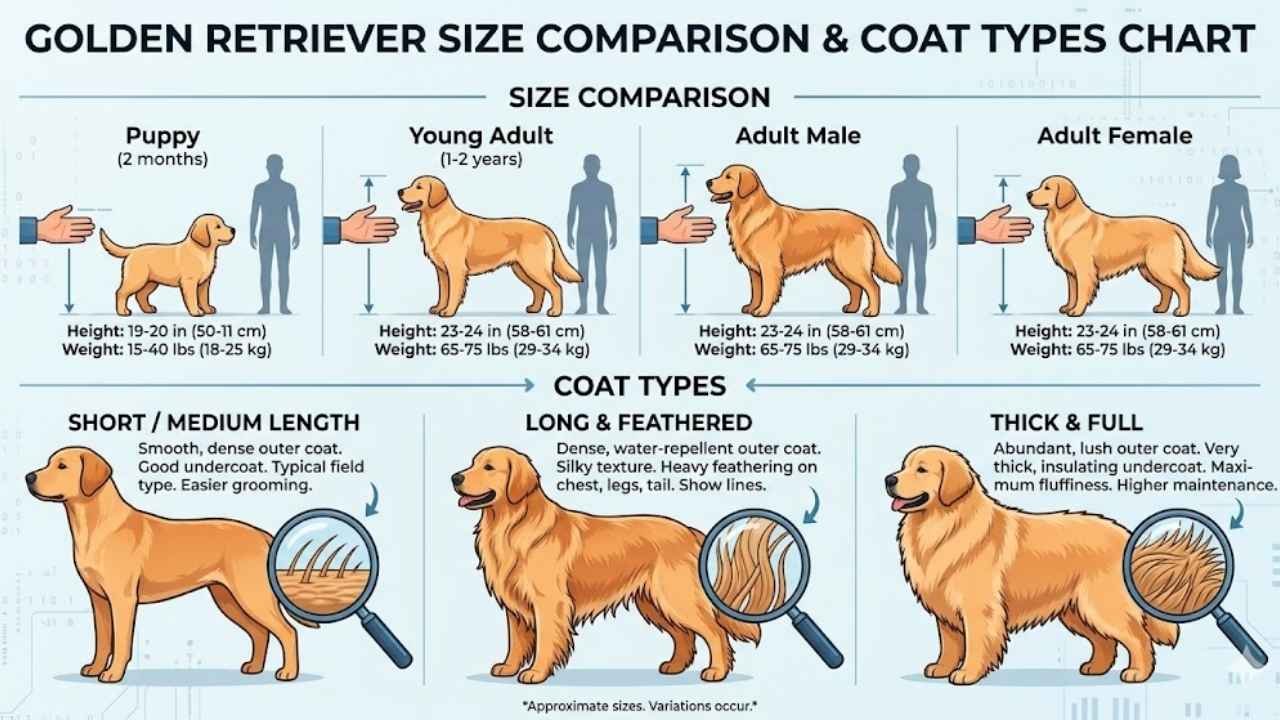
The golden retriever’s size and weight vary slightly by type. American types are taller. British types are heavier.
Their coat type is double-coated, which is thick and water-resistant. This helps them in outdoor work. Regular dog grooming is needed due to heavy dog shedding, as recommended in this general dog care and grooming guide.
Health Differences Between Golden Retriever Types
All golden retriever types may face similar health issues. Common problems include hip dysplasia in dogs and elbow dysplasia.
These are common canine health issues. Regular vet visits improve a dog’s lifespan. Choosing good breeders also reduces risk.
How to Choose the Right Golden Retriever Puppy
A smart golden retriever puppy buying guide starts with research. Always check the breeder’s station and health tests.
Use a trusted golden retriever breeder’s guide before buying. Also, compare golden retriever prices by type to match your budget.
Pros and Cons of Different Golden Retriever Types
Each of the kinds of golden retrievers has strengths and weaknesses. Field types are active but demanding. Show types are calm but need grooming.
Understanding these differences helps you decide. In the end, all golden retriever types offer love, loyalty, and companionship.
FAQs About the Kinds of Golden Retrievers
[sp_easyaccordion id=”977″]